



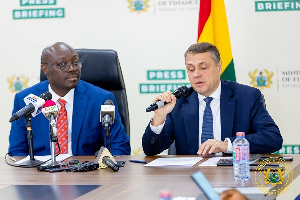
 Finance MInister, Ato Forson(L) with IMF Mission Chief to Ghana, Ruben Atoyan (R)
The International Monetary Fund (IMF) has backed Ghana’s plan to ease fiscal tightening from 2027, allowing government more room to finance development projects while maintaining long‑term debt reduction goals.
In its latest Article IV Consultation and proposed Policy Coordination Instrument (PCI) report, the IMF said Ghana’s improving debt position and stronger macroeconomic stability provide scope to slow the pace of fiscal consolidation.
The Fund noted that Ghana could reduce its primary surplus target from 1.5% of GDP to 0.5% from 2027 without jeopardising the objective of cutting public debt to 45% of GDP by 2034.
The IMF stressed, however, that the adjustment must be supported by credible fiscal reforms to safeguard debt sustainability and investor confidence.
BoG's gold purchase programme posted $1.7 billion loss in 2025 - IMF report
Key reforms include strengthening tax administration, public financial management, and oversight of state‑owned enterprises.
“The lowering of the fiscal primary surplus will be supported by an ambitious package of fiscal structural reforms to contain quasi‑fiscal pressures and safeguard debt sustainability,” the report stated.
Ghana’s approved 2026 budget targets a primary surplus of 1.5% of GDP, in line with current programme commitments.
From 2027, the revised fiscal approach would provide government with more space to finance priority investments while keeping adequate policy buffers.
The IMF pointed out Ghana’s significant development financing needs, estimating annual spending of more than 16% of GDP by 2030 to meet key Sustainable Development Goals (SDGs), particularly in education, healthcare, and infrastructure.
It added that investments in agriculture and energy could attract private capital, boost value addition, and create jobs for young people.
The proposed PCI programme includes plans to increase primary spending from 2027, with a stronger focus on capital projects, while boosting revenue through tax reforms and improved compliance.
Ghana drops 1,800 public projects after spending review - IMF
Measures will include reviews of customs, excise, and income tax laws under the Medium‑Term Revenue Strategy.
The Fund mentioned that the authorities remain committed to implementing fiscal reforms, increasing revenue mobilisation and ensuring that the additional spending space is used effectively.
DR/SA

Copyright © 1994 - 2026 GhanaWeb. All rights reserved.










