



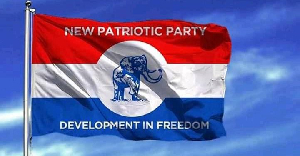
 The proposals sought changes to the party’s leadership structure
Several members and groups within the New Patriotic Party (NPP) have proposed sweeping amendments to the party’s constitution ahead of its National Delegates Conference scheduled for September 19, 2026.
The proposals, contained in a compilation submitted for consideration by the party’s constitutional review process, seek changes to the party’s leadership structure, electoral colleges, grassroots organisation, diaspora participation and special organs.
A recurring theme among the proposals is the need to make the NPP more inclusive while strengthening its structures from the grassroots to the national level.
One of the prominent proposals seeks to increase the number of National Vice-Chairpersons from three to six, with three elected and three appointed.
Supporters of the proposal argue that the expansion would give the National Chairperson greater capacity to delegate responsibilities while improving coordination and representation across Ghana’s 16 regions.
The proposal states that the additional positions would help the party achieve “geographical, ethnic, religious, and gender balance” and improve its ability to respond to issues at the regional and constituency levels.
Another proposal seeks to clearly define who should lead the party at different stages of its political cycle.
Under the proposed arrangement, the Presidential Candidate would become the Leader of the Party, while the National Chairperson would act as leader when the party is in opposition before a Presidential Candidate is elected.
Where the NPP is in government, the sitting President would act as party leader until a Presidential Candidate is elected, after which the candidate would immediately assume the role.
The proposal argues that the arrangement would prevent “parallel centers of power, internal friction, confusion in messaging, or weakened governance.”
Former executives, MPs seek voting rights
A separate proposal has called for former NPP executives and former Members of Parliament to retain voting rights in the party’s internal elections, provided they remain members in good standing.
The proposal covers former national, regional and constituency executives, as well as former MCEs, DCEs and MPs.
The proponents contend that the current arrangement sidelines experienced party members once they leave office.
They argue that excluding such persons results in the “marginalization of experience” and can create “post-office apathy” and internal divisions.
Under the proposed amendment, such former officials would become automatic members of the relevant electoral colleges and would be allowed to vote in constituency, regional, national executive and presidential primary elections.
Christian Wing proposed
Another major proposal seeks the creation of a National Christian Wing as a special organ of the NPP, structured similarly to the existing National Nasara Wing.
The proposal, submitted by Offinso North MP Dr Fred Kyei Asamoah, seeks to establish Christian Organisers at the national, regional and constituency levels.
Dr Asamoah argues that the proposed structure is intended to promote institutional parity and engagement rather than religious preference.
The proposal says it is meant “not to prefer one faith community over another, but to complete the Party's mobilisation architecture, strengthen interfaith confidence, and ensure accountable engagement across a major part of its national coalition.”
If approved, the National Christian Organiser would be elected at the National Delegates Conference, while two deputies would be appointed by the National Executive Committee in consultation with the National Council.
YEF wants constitutional recognition
The Young Executive Forum (YEF) is also seeking to regain formal recognition as a special organ of the party, together with voting rights at the National Delegates Conference.
The YEF says it was recognised in earlier versions of the NPP Constitution but was omitted following amendments in 2009 and remained excluded in subsequent amendments in 2017 and 2025.
According to the proposal, the YEF brings together professionals, entrepreneurs, corporate executives and other experts who contribute to policy development, fundraising, leadership development and political research.
It argues that the forum “deserves to participate with voting rights in the election of Party leaders in the National Delegates Conference.”
The proposed amendment would add the YEF to the list of the party’s special organs alongside the National Women’s Wing, National Youth Wing and National Nasara Wing.
TESCON integration
Mampong MP Kwaku Ampratwum-Sarpong has proposed that the Tertiary Students Confederacy Network (TESCON) be formally integrated into constituency party structures.
Under his proposal, every recognised TESCON branch would be affiliated with the constituency party where its tertiary institution is located.
The TESCON President would also serve as an ex-officio member of the Constituency Executive Committee, while TESCON members would be encouraged to participate in political education, membership drives, campaign planning and polling station organisation.
The proposal argues that “TESCON should not operate on the periphery of the Party's organizational structure” and that its integration would help create a structured transition from campus politics into grassroots party organisation.
Diaspora branches seek greater representation
The NPP External Branches Caucus, representing 30 external branches, has also proposed significant changes to the party’s treatment of its overseas structures.
Among other things, the caucus is seeking voting rights for serving chapter executives in presidential primaries and national officer elections, mechanisms for in-country voting and certified transmission of results to Ghana.
It also wants increased representation of external branches on the National Council and National Executive Committee.
The caucus says its proposals would give external branches “a clear organisational structure befitting their scale and contribution” while extending the franchise to chapter executives.
More proposals target grassroots structures
Other proposals include extending voting rights to permanent NPP headquarters staff, recognising IT officers within the party’s executive structures and creating deputy communications positions at the regional and constituency levels.
A proposal from headquarters staff argues that employees who work daily to run the party’s administrative machinery should have a say in choosing its leaders.
It describes headquarters staff as “the administrative engine of the party” and says giving them voting rights would improve morale and strengthen internal democracy.
Meanwhile, the party’s Director of Information Technology has proposed that IT officers be formally recognised within constituency structures, with the constituency executive expanded to include an IT Officer.
The proposal says this would improve “efficiency, accountability, data security, coordination, institutional continuity” and the party’s preparedness for elections.
The 16 Regional Councils of Elders have separately called for their chairpersons to become automatic delegates to National Delegates Conferences, with voting rights.
They argue that the councils represent members whose years of service and experience should give them a voice in decisions determining the party’s future.
“The Regional Councils of Elders are not seeking special privilege but appropriate recognition of a role that the Party’s own Constitution already acknowledges and respects,” the proposal states.
The various proposals are expected to go through the appropriate constitutional review processes before being considered by delegates.
One of the proposals notes that amendments presented for adoption at the National Delegates Conference require the affirmative vote of at least two-thirds of delegates present. The conference is scheduled for September 19, 2026.
If adopted, the proposed reforms could significantly reshape how the NPP is organised, how its leaders are selected, and how different categories of members participate in the party’s decision-making process.
NA/AM

Copyright © 1994 - 2026 GhanaWeb. All rights reserved.










