


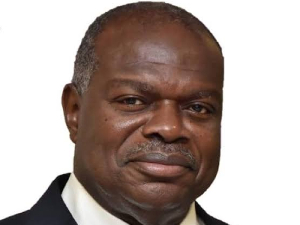
 Ernest Aryeetey is a professor of Development at ISSER
Professor of Development Economics at the Institute of Statistical, Social and Economic Research (ISSER) at the University of Ghana, Professor Ernest Aryeetey, has identified frequent changes in Ghana's education policies as one of the factors contributing to problems in the country's school system.
He criticised what he described as the tendency for education reforms to be driven by the personal preferences of individuals rather than evidence-based assessments of the country's educational needs.
Speaking at the Achimota Speaks event on Wednesday, November 11, 2026, Prof Aryeetey said education had experienced more policy changes than any other sector in Ghana, with several of the decisions influenced by officials' personal experiences and preferences.
“Many of the changes that we've seen in education, and education has seen more changes than any other sector in this country. Many of the changes have been prompted by personal preferences,” he said.
He explained that some officials returned from international conferences impressed by education systems in other countries and subsequently pushed for similar policies to be introduced in Ghana without adequately considering local circumstances.
“Individuals go to conferences, they sit by somebody from Malaysia, and the Malaysian tells them about how they are doing and is impressed. Now as soon as they return to Ghana, they start a memo to the minister, they start a memo to the chief director, and that's how our changes are. They will push and push and push,” he said.
Prof Aryeetey also raised concerns about the declining quality of education in Ghana, arguing that the challenges were affecting even some of the country's most prestigious secondary schools.
Prof Aryeetey chides successive governments on educational reforms
He cited Achimota School as an example, saying the proportion of students who fail to progress to university had increased significantly compared with previous years.
According to him, more than 35 per cent of students from the school fail to secure university admission, with the figure exceeding 40 per cent in some years.
“Today, if you go to Achimota School, your chances of not earning a beneficiary institution are more than 35 per cent. In some cases, in some years, more than 40 per cent,” he stated.
He contrasted the situation with previous years, when only about five per cent of Achimota School students failed to progress to university.
Prof Aryeetey stressed that the problem was not peculiar to Achimota School but reflected a wider challenge affecting leading secondary schools across the country.
“So, there's enough evidence that there is a problem with the school system, and it's not only Achimota School. All the best schools in Ghana have the same problem,” he added.
MRA/BAI
Who Is Responsible for Stray-Bullet Injuries and Deaths?

Copyright © 1994 - 2026 GhanaWeb. All rights reserved.










