



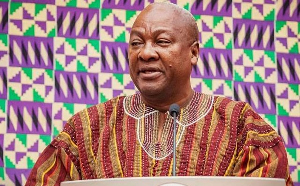
 President John Dramani Mahama
Government has welcomed what it describes as a landmark apology by His Holiness Pope Leo XIV over the Catholic Church’s role in the transatlantic slave trade, describing the gesture as a significant step toward historical justice and reconciliation.
In a statement issued by the Presidency on May 28, 2026, the government said the Pope’s acknowledgement of the Holy See’s involvement in “legitimising and sustaining the enslavement of Africans and the transatlantic slave trade” demonstrates moral courage and strengthens ongoing global conversations on truth, dignity and justice.
According to the statement, Ghana recognises Pope Leo XIV’s longstanding commitment to compassion, service and the protection of human dignity, noting that he has consistently championed social justice, solidarity with vulnerable communities and moral accountability.
Government indicated that the apology comes at a crucial period when the international community is increasingly confronting the lasting impact of slavery and colonialism on African societies and the African diaspora.
“For five centuries, millions of Africans and people of African descent endured unimaginable suffering and dehumanisation through systems of racialised chattel enslavement whose effects continue to shape societies and communities across the world today,” portions of the statement said.
The Presidency stressed that confronting this painful history through honest reflection remains essential to healing and reconciliation.
President John Dramani Mahama, according to the statement, considers the Pope’s remarks especially important because they reinforce growing international recognition that addressing historical injustices requires truth-telling and
moral responsibility.
Ghana welcomes Pope's apology over Catholic Church's role in slavery
Government also linked the apology to the recent adoption of United Nations Resolution A/RES/80/250, which formally recognised the trafficking and enslavement of Africans as “the gravest crime against humanity.”
The statement described the resolution as a major milestone in preserving historical memory and advancing global dialogue on justice, equality and dignity for Africans and people of African descent.
The Presidency further disclosed that discussions leading to the adoption of the UN resolution included debates surrounding historical references to the Church’s involvement in slavery, including Papal Bulls issued during the colonial era.
Against this backdrop, government described Pope Leo XIV’s apology as “particularly significant and refreshing,” saying it reflects a willingness to confront difficult truths in the interest of justice, understanding and reconciliation.
Government noted that Ghana remains deeply connected to the legacy of the slave trade, with the country’s forts and castles serving as enduring reminders of one of the darkest periods in human history.
The statement added that Ghana remains committed to working with international partners, faith-based organisations, civil society groups and other stakeholders to promote remembrance, historical justice and the restoration of human dignity.
As part of these efforts, government announced that Ghana will host a High-Level Consultative Conference in Accra from June 17 to 19, 2026, under the leadership of President Mahama, to discuss next steps following the UN resolution and sustain international engagement on historical justice and remembrance.
President Mahama also expressed appreciation to Pope Leo XIV for what government described as a “significant step,” while reaffirming Ghana’s commitment to advancing truth, healing and shared humanity.
VPO

Copyright © 1994 - 2026 GhanaWeb. All rights reserved.










