



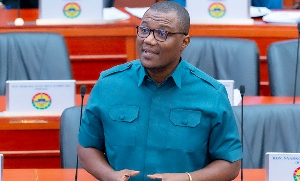
 Dr Nana Ayew Afriye is the Member of Parliament for Effiduase-Asokore
Member of Parliament for Effiduase-Asokore, Dr Nana Ayew Afriye, has added his voice to the ongoing national debate on whether Muslim students should be allowed to fast, pray, or wear the hijab in Christian missionary schools, urging Ghanaians to “call a spade a spade” and respect the identities of the institutions students choose to attend.
Dr Ayew Afriye, who also served as Campaign Coordinator for Dr Mahamudu Bawumia in the Middle Belt for the 2024 National elections, and currently his Liaison for the Ashanti region for the NPP Presidential primaries, argued that Ghana must remain honest about the foundational values of its educational system, particularly mission schools that have maintained their religious ethos for decades.
Methodist Church responds to Supreme Court case involving Wesley Girls' High School
According to him, parents and students must understand the consequences of their school choices and appreciate the traditions that come with them.
“We must be happy with what we bargained for,” he said. “When you choose a Christian school, you are aware of the environment you are entering, just as a Christian student would respect the norms of an Islamic school. Each institution has an identity, and that must be respected.”
Dr Ayew Afriye stressed that attempts to compel Christian mission schools to permit practices such as Ramadan fasting, hijab-wearing, or Islamic prayer arrangements must be approached with caution, warning that such pressure could undermine the traditions that have shaped the discipline and academic excellence of these schools for generations.
“There are Islamic schools in Ghana, and there are Christian schools in Ghana. Each has an ethos. You cannot choose one and demand that it fully adopt the practices of the other. That is not discrimination; it is principle,” he noted.
Background to the Debate:
The issue of whether Muslim students should be allowed to practice aspects of their faith in Christian-founded schools has resurfaced several times in recent years. Many senior high schools—such as Wesley Girls’, PRESEC, Holy Child, and Adisadel College were established by Christian missions and continue to uphold Christian traditions despite being state-funded.
Muslim groups, parents, and advocacy organisations have argued that since these schools are now public institutions funded by taxpayers of all backgrounds, they should accommodate Muslim practices, including fasting during Ramadan, wearing the hijab, and observing daily prayers. They point to constitutional guarantees of freedom of religion and non-discrimination.
On the other hand, mission schools and Christian bodies maintain that preserving their religious identity is essential to maintaining discipline and consistency. They argue that rules restricting fasting or uniform variations are longstanding and often based on administrative and health considerations.
This clash between religious freedom and institutional autonomy has led to repeated tensions, with schools like Wesley Girls’ featuring prominently in past disputes. Government, however, has often called for calm and encouraged dialogue, avoiding a blanket national policy on the matter.
Call for Balance:
Dr Ayew Afriye urged all sides to remain measured and avoid framing the issue as one that pits Muslims against Christians.
We’re not seeking mosques in mission schools, only the right to pray and fast - Muslim Conference
He emphasised the need for mutual respect and a balanced approach that safeguards both the rights of students and the foundational ethos of the country’s mission schools.
“We cannot destroy the very cultures that made these schools successful in the first place,” he said. “Ghana succeeds not by erasing differences but by managing them with wisdom and tolerance.”



Copyright © 1994 - 2026 GhanaWeb. All rights reserved.










