



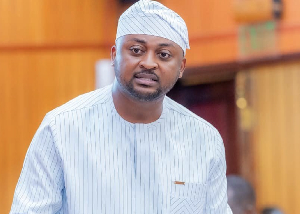
 Vincent Ekow Assafuah is the Member of Parliament for Old Tafo
Ranking Member on Parliament’s Youth and Sports Committee, Vincent Ekow Assafuah, has raised serious concerns over what he describes as a growing crisis of substance abuse and mental health struggles among Ghanaian youth following revelations from the ongoing security services recruitment exercise.
In a press statement issued on Wednesday, May 27, 2026, the Old Tafo MP warned that the latest figures from the recruitment screening should serve as a national wake-up call and not be dismissed as an isolated recruitment challenge.
The statement follows disclosures by the Minister for the Interior, Mohammed-Mubarak Muntaka, who revealed during an interview on Accra-based Pan African Television that more than 6,000 applicants had failed the medical stage of the recruitment process due to drug use and mental health conditions.
According to Assafuah, over 4,000 applicants failed drug screening tests, while another 2,000 were disqualified because of mental health challenges out of more than 100,000 young people who progressed to the medical examination stage.
“Consequently, more than six thousand young people, approximately six per cent of the entire cohort, were denied the opportunity to serve their country on account of substance abuse and mental ill health,” portions of the statement read.
The Old Tafo MP described the figures as deeply troubling, stressing that they expose “not merely a recruitment challenge, but a growing public health crisis with far-reaching implications for Ghana’s youth and national development.”
In the statement, the MP argued that the findings should alarm the country because the affected applicants were among the most motivated young people in society.
“These are the young men and women who, on the morning of the medical, woke up, washed, dressed and presented themselves to the state. They wanted to serve. They had cleared the earlier hurdles. They had something to lose,” he stated.
He added that if six out of every hundred applicants among “the willing, the prepared, and the motivated” could not pass basic assessments of “body and mind,” then the country must confront the difficult question of what may be happening among “the unprepared, the despairing, and the unseen.”
Assafuah further noted that, while the exercise was not designed as a nationwide scientific study, it remains the largest simultaneous multi-regional health screening of a Ghanaian youth cohort in the country’s history.
“These figures are not a judgment on Ghanaian youth. They are a warning signal from a problem we have scarcely begun to measure,” he stressed.
The Ranking Member also linked the recruitment findings to existing studies on drug abuse and mental health challenges in Ghana, insisting that the screening results merely confirm concerns experts and institutions have raised for years.
“The security services screening is not an outlier. It is an echo,” the statement said.
He criticised what he described as years of inadequate national attention to mental healthcare, revealing that mental health currently receives less than 1.5 per cent of Ghana’s total health budget.
Assafuah also warned that before the introduction of the expanded screening regime, individuals battling substance abuse and mental health conditions may have entered the country’s security institutions undetected.
In response to the findings, the MP proposed several measures, including a parliamentary inquiry into the recruitment screening, a nationwide youth mental health and substance abuse survey, increased mental health funding, school-based counselling interventions and expanded rehabilitation infrastructure.
He further called for a bipartisan national compact involving Parliament, government agencies, religious bodies, traditional leaders and civil society groups to collectively address the crisis confronting young people.
Ending the statement with a passionate appeal, Assafuah urged Ghanaians not to reduce the issue to partisan politics but instead view it as a matter affecting the future of the country.
“Ghana’s future does not live in our oil. It does not live in our cocoa. It does not live in our gold. It lives in the bodies and the minds of eleven point eight million young people,” he declared.
“We have just been told, for the first time and at scale, that something is the matter with that future. The hour calls us not to despair, and not to denial, but to work.”

Copyright © 1994 - 2026 GhanaWeb. All rights reserved.










