



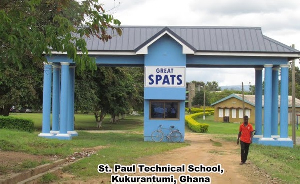
 A file photo of St Paul Technical School
As Ghana works toward Sustainable Development Goal 4 — inclusive and equitable quality education for all by 2030 — St. Paul Technical School (SPATS) at Akyem-Kukurantumi in the Abuakwa North Municipality of the Eastern Region is grappling with a severe infrastructure deficit that threatens teaching and learning.
The nearly 70-year-old technical institution is facing an acute shortage of furniture. Many students are either forced to stand through lessons or sit on broken, improvised seats while writing on their laps.
School authorities say the situation is affecting students’ concentration, classroom participation, and academic performance, raising concerns about the future of technical and vocational education in the area.
Urgent appeal at graduation ceremony
Speaking at SPATS’ 3rd graduation ceremony for TVET students, Principal Teye-Bi-Teye Agualey made a passionate appeal to government and stakeholders to urgently address the school’s deteriorating infrastructure.
He said the institution has struggled for years with inadequate and aging facilities that are seriously affecting teaching and learning. He added that immediate intervention is needed to renovate and upgrade key structures, including the dining hall, dormitories, classrooms, and other essential facilities.
Agualey described the dining hall as being in a “deplorable state,” noting that unsafe conditions are making learning uncomfortable and posing risks to students and staff.
He called on government, alumni, corporate bodies, NGOs, and philanthropists to support the school.
Old students association backs appeal
Ing. Charles N. Amoako, President of the St. Paul Technical School Old Students Association (SPATSOSA), also urged government to intervene urgently.
He said the association has continuously provided logistics and development support, but the scale of the challenges demands broader assistance.
“We are doing our best to provide chairs, tables, and other essentials, but the situation demands national attention,” he said.
Ing. Amoako noted that furniture shortages remain a major concern. He explained that several classrooms lack enough desks and chairs, forcing some students to sit on broken furniture or write on their laps — a situation he said undermines concentration, lowers morale, and affects academic performance.
Hope for improvement
School authorities believe improved infrastructure will help SPATS enhance educational outcomes and continue delivering quality technical education to students in the region.
Management and students remain hopeful their appeal will be heard so facilities can be restored and a safe, comfortable learning environment created for all.

Copyright © 1994 - 2026 GhanaWeb. All rights reserved.










