



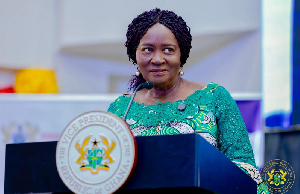
 Vice President, Professor Naana Jane Opoku-Agyemang
Vice President Professor Naana Jane Opoku-Agyemang has issued a strong warning that teachers who abuse students or misuse their authority in schools will face swift and decisive sanctions.
Speaking at the 2025 Ghana Teacher Prize celebration, the Vice President said leadership cannot ignore the actions of teachers and school managers who betray the trust placed in them by abusing children under their care.
She described such behaviour as a grave violation of professional responsibility and pledged that the government would ensure offenders are held accountable.
“As teachers, we must always remember that we are placed in a position of trust, protection, and empathy. The power given to us is to facilitate learning,” she stated.
“We will not wait to apply sanctions to those who violate this trust. Transfers are not punishments and should never be used for those who abuse our children, betray their trust, and disgrace our profession.”
Professor Opoku-Agyemang said the government is committed to protecting students and safeguarding the integrity of the teaching profession.
The Vice President also expressed concern about increasing incidents of violence and indiscipline in schools and said the government will not tolerate attacks on teachers either.
“The Ministry of Education and the leadership of the education services will deal decisively with attacks on our teachers, especially physical assault,” she declared, adding that it takes a whole community to support teachers as they shape the country’s future leaders.
She stressed that teachers deserve protection and respect as they play a vital role in national development.
The government, she said, would continue to work closely with the Ghana Education Service and security agencies to ensure the safety of teachers and a conducive teaching and learning environment in schools.
Parent-Teacher Associations (PTAs), she added, will also be revived to strengthen community participation and help address issues affecting both teachers and learners.
Professor Opoku-Agyemang reminded the nation that teachers are central to Ghana’s development agenda, describing education as the lifeblood of democracy and a backbone of economic progress.
“Our agenda cannot be fulfilled if teachers are not in their rightful place. Teachers are central to the talents, skills and attitudes that will accelerate the 24-hour economy and our overall development as a country,” she said.
She paid tribute to the late President Flight Lieutenant J. J. Rawlings for establishing the Best Teacher Award scheme in 1994, which continues to celebrate teachers’ indispensable roles, especially those working in challenging conditions.
“The nation recognises every teacher who has chosen service over self-sacrifice, over comfort, and nation-building over personal gain,” she said.
Highlighting the government’s education reforms, Professor Opoku-Agyemang said President John Dramani Mahama’s administration had, over the past nine months, worked tirelessly to strengthen institutions and transform the sector.
Among the measures is the inclusion of teacher accommodation in new school projects to improve working and living conditions.
She also revealed that trainee teachers would soon be able to write their licensure examinations in their training institutions, making the process more convenient, while the promotion of deputy directors in the education service would be expedited.
Digital transformation remains a major priority, she added, with over 60,000 teachers already trained in pedagogy, digital literacy, and inclusive teaching approaches under a new national digital teacher training programme.
The Vice President also pointed to efforts to support teachers’ mental health. Citing a UNESCO report that identified mental well-being as a key challenge to achieving quality education by 2030, she said capacity-building workshops on mental health and psychosocial well-being had been held nationwide through collaboration between the National Teaching Council, Ghana Education Service, and teacher unions.
Other government interventions, such as enhanced meal provision in secondary schools, capitation grants at the basic level, and the “No Stress Fee” initiative at the tertiary level, are also reducing pressures in the education system.
“The gradual reduction of stress in our schools is noted with gratitude by government, parents, students, and school management,” she said.
While acknowledging persistent challenges such as infrastructure and human resource gaps, she commended teachers for their resilience and innovation.
“Even in the face of these challenges, our teachers have continued to improvise with what they have, and I want to salute all of you,” she stated.
The Vice President concluded by calling for collective action to support teachers and improve education delivery.
“With your understanding, support and collaboration, I believe we can do even more,” she said.

Copyright © 1994 - 2026 GhanaWeb. All rights reserved.










