



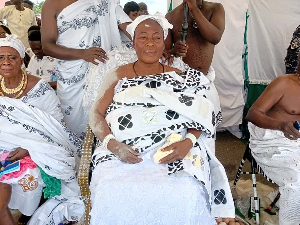
 Nana Afua Tabiri is priestess of the Obuor Tabiri Shrine
Traditional worship is rising and becoming more beautiful, Nana Afua Tabiri, priestess of the historic Obuor Tabiri Shrine in the New Juaben Traditional Area, has declared as she marked 40 years of service in Koforidua.
In a country celebrated for its religious diversity and tolerance—where Christianity, Islam, and African traditional faiths coexist—her words reflect a growing shift in attitudes.
According to her, once dismissed or stigmatised by many, traditional worship is gradually being embraced as an integral part of Ghana’s cultural and spiritual identity, offering communities not only guidance and healing but also a reaffirmation of their heritage.
The forecourt of the New Juaben Palace was filled with colour, culture, and reverence on Friday, September 19, 2025, as the people of New Juaben celebrated Nana Afua Tabiri’s four decades of dedicated service.
Nestled on the Obuor Tabiri Mountain, the shrine has for centuries remained a spiritual cornerstone of the New Juaben people. Since 1985, when she was chosen at age 17, Nana Afua Tabiri has served as the custodian of its sacred traditions, mediating between the gods and the community while providing guidance, healing, and blessings to thousands who visit the shrine.
Cautioning Ghanaians against harmful practices such as money rituals, drug abuse, and the misuse of spiritual powers, the priestess stressed that quackery exists across all walks of life, including churches and workplaces, and urged the public to embrace righteousness and respect for tradition.
The anniversary coincided with the annual Yam Festival, adding deeper significance to a season of thanksgiving and cultural reflection. For eight days, the celebrations brought together chiefs, queen mothers, traditional priests, cultural troupes, and residents from across the Eastern and Ashanti Regions.
Activities began with the symbolic Lighting of the Festival Fire (Ayga Sor) on September 18, followed by a series of traditional and spiritual events, including a Mini Durbar at the shrine, sacred rites such as Nananom Suman Brafos, Ye Betu Nson, and Apaso Yie, as well as a thanksgiving service at Sankofa Tete Asori. The grand durbar on September 19 stood out as the climax, showcasing rich displays of drumming, dancing, and homage to Nana Afua Tabiri’s four decades of service.
She further recounted her contributions to society, from assisting pregnant women and business operators to ensuring the security and welfare of individuals who seek help at the shrine.
The Member of Parliament for New Juaben South, Michael Okyere Baafi, commended the priestess for her enduring service and called for harmony among different faiths.
“Peaceful co-existence between all religions is essential. Our constitution calls for tolerance, and we must uphold unity and culture as a foundation for national development,” he said.
Also in attendance was Nana Abass, Ashanti Regional Chairman of the Fetish Priests and Priestesses Association of Ghana, who urged the government to collaborate with traditional leaders in promoting cultural education and youth empowerment.
“We plan to establish a skills training school for young people interested in cultural practices. Government support is crucial, and we must also intensify the fight against illegal mining to protect our environment,” he noted.
For the people of New Juaben, the celebrations were more than a tribute to an individual. They reaffirmed the enduring place of the Obuor Tabiri Shrine as both a spiritual refuge and a cultural symbol. Nana Afua Tabiri’s 40 years of service reflect not only her personal commitment but also the resilience of Ghana’s traditional heritage in the face of change.



Copyright © 1994 - 2026 GhanaWeb. All rights reserved.










