



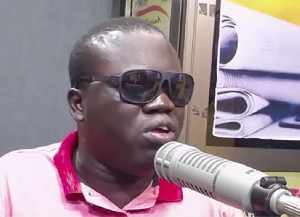
 Gilbert Boateng Agyare is a convener of the group
A coalition of unemployed tertiary graduates with disabilities has issued a one-month ultimatum to the Mahama administration, warning of nationwide protests if a clear and workable employment plan is not presented to them.
In a statement released on Monday, February 9, 2026, the group said its members are “deeply disappointed, frustrated and angry” over what it described as prolonged neglect by the State.
They have consequently signaled to the government that failure to act on the request by March 9, 2026, will result in nationwide protests.
“We will mobilise our members from all sixteen regions, with our wheelchairs, white canes, and crutches, to occupy the seats of power until our voices are heard,” the statement said.
In a report drawn from the statement sighted by asaaseradio.com, the Coalition of Unemployed Tertiary Graduates with Disabilities indicated that hundreds of qualified graduates have remained jobless for more than six years despite holding degrees in fields such as Education, Law, Administration and Information Technology.
“For over six years now, hundreds of us qualified, skilled, and certified by various tertiary institutions across the country have been left to languish in poverty at home,” the statement said, adding that members made “great personal and financial sacrifices” to acquire their degrees.
The coalition said the situation represents a breach of their fundamental human rights and dignity.
Citing data from the 2021 Population and Housing Census, it noted that persons with disabilities account for about eight per cent of Ghana’s population, representing more than 2.1 million people.
Unemployed Graduates with Disability calls off demonstration
While Ghana’s national unemployment rate is estimated at 13 per cent, the group said unemployment among persons with disabilities in the formal sector is nearly double.
It stressed that only about 27 per cent of working-age persons with disabilities are employed, compared to more than 56 per cent of able-bodied Ghanaians.
“The majority of our members are forced into the informal sector or street begging,” the coalition said.
The group also accused state institutions of discriminatory recruitment practices.
“We continue to see systems that favour able-bodied applicants over qualified persons with disabilities,” the statement noted, describing the trend as a major barrier to inclusion in public sector employment.
The coalition urged government to fulfil its local and international commitments, including the Persons with Disability Act, 2006 (Act 715) and the United Nations Convention on the Rights of Persons with Disabilities, as well as International Labour Organization guidelines on employment quotas.
It reminded the government of President John Dramani Mahama’s earlier pledge to enforce a five percent employment quota for persons with disabilities in both public and private sector recruitment.
As part of its demands, the group is calling for an immediate roadmap to absorb the backlog of unemployed graduates with disabilities into the public sector, strict enforcement of employment quotas, and incentives for private companies.
SO/VPO
Understanding Ghana's stock market and how to invest | BizTech

Copyright © 1994 - 2026 GhanaWeb. All rights reserved.










