



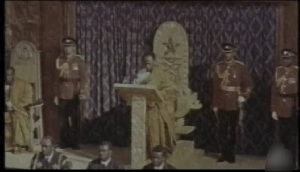
 Kwame Nkrumah ushered the country into its first Republican Parliament in the early 1960s
Archival footage has shown a poignant moment in Ghana’s political history, showing how Ghana's first president, Kwame Nkrumah ushered the country into its first Republican Parliament in the early 1960s.
The historic scene, shared by Ghana Television, took place just four days after Ghana was officially declared a republic, marking a decisive shift away from the British Crown and the beginning of a new chapter in the nation’s governance.
The footage showed Members of Parliament filling the chamber, dressed in traditional kente cloth, reflecting the pride and cultural identity of the newly independent state.
Moments later, Nkrumah was ceremoniously ushered into the chamber to loud applause in the room.
At the centre of the room stood an ornate state chair carved in gold. The president took his seat before rising to address the House, beginning with a reflection on the symbolic transformation of the nation’s institutions.
Police arrest 112 in anti-drug, prostitution operation
“With its crown and cipher, it gives way to a new maze of African design. As in Britain, Mr Speaker, members of the Nation Assembly, four days ago the nation was ushered into a new life by the proclamation of the Republic of Ghana,” he said.
Nkrumah then acknowledged the significance of the moment and the excitement surrounding the first meeting of the Republican Parliament.
“Today, the first formal meeting of the Republican Parliament takes place in changed circumstances, or to regard to the physical arrangement of the house and to the spirit of excitement which possesses us all at this moment,” he added.
He concluded by expressing hope that the lawmakers would be guided in their work for the benefit of the Ghanaian people.
“In the endless hope that divine providence may guide your deliberations and further the wealth of our people, I now leave you to the successful discharge of your duties,” Kwame Nkrumah added.
Watch the video below:
FKA/AE
ADHD Explained: What it really looks like in everyday life

Copyright © 1994 - 2026 GhanaWeb. All rights reserved.










