



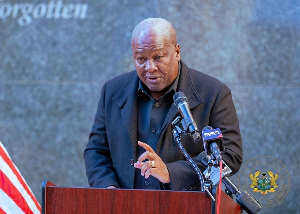
 President of the Republic of Ghana, John Dramani Mahama
President John Dramani Mahama has opened up about an emotional encounter that preceded Ghana's reparatory justice win at the UN, offering a bit of insight into efforts to connect with their ancestors in the fight to secure passage of the resolution.
Speaking in a video widely shared by the Media Relations Officer for the Foreign Affairs Ministry, Fred Duhoe, after the victory at the United Nations on March 25, 2026, Mahama termed the moment as one that transcends politics.
He explored the intersection of the reparations movement with cultural heritage, historical memory, and restorative justice.
Mahama signals next move after UN Reparatory justice victory
According to him, before his presentation seeking the global recognition of slavery as a crime against humanity at the UN, they made a deliberate stop at the African burial grounds sites steeped in the painful legacy of the transatlantic slave trade and offered prayers before making the move.
“Before we went to the UN today, we went to the African burial grounds, and we all know the history behind the African burial grounds. We said Christian prayers, we said Muslim prayers, we said traditional African prayers, we poured libation and called on our ancestors to stand behind us in what we are going to do today and today I think that they answered our call and we achieved success,” he added.
He explained that the move was not only symbolic, but an honour and appeal to ancestors who endured centuries of brutality, displacement and dehumanisation.
“Our ancestors must be rejoicing in their graves and all the torture and adversity they went through; they must be happy that this day the world has recognized that they are not forgotten and that the pain they went through and the torture they went through has been recognized by the United Nations, the world's highest body that we all ascribe to,” he said.
For Ghana, a nation widely known as the gateway to Africa’s diaspora through initiatives like the “Year of Return,” the moment carries both historical and moral weight.
He emphasised that while the vote represents validation, it also reopens old wounds that demand healing, not just acknowledgement.
He further urged that the victory at the UN is only the beginning of a much longer journey, one that must now shift from recognition to tangible outcomes.
SO/VPO
Why the US voted against Ghana’s resolution to declare slavery a crime against humanity

Copyright © 1994 - 2026 GhanaWeb. All rights reserved.










