



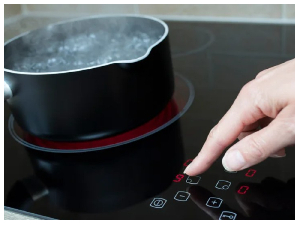
 Induction cookers use electromagnetic energy to heat compatible cookware directly
Induction stovetops are becoming increasingly popular around the world because of their energy efficiency, sleek appearance and precise temperature control.
Unlike conventional gas or electric stoves, induction cookers use electromagnetic energy to heat compatible cookware directly.
However, making the switch to induction cooking comes with some disadvantages that homeowners should consider before making a purchase.
According to a report by Mashed on September 21, 2026, one of the biggest drawbacks is that not all cookware is compatible with induction technology. The appliances can also involve significant installation and repair costs, while their glass surfaces require careful handling.
1. Not all cookware works with induction
Induction stovetops require cookware containing magnetic material to generate heat. Cast iron, carbon steel, magnetic stainless steel and some non-stick pans with magnetic bases are generally compatible.
Pure aluminium, copper, glass and ceramic cookware typically will not work unless they have a suitable magnetic base.
5 safety checks you should make before going to bed
A simple way to check compatibility is to place a magnet against the bottom of the pan. If it sticks firmly, the cookware is likely to work with an induction cooker.
The shape of the cookware can also matter. Flat-bottomed pans generally provide better contact with the cooking surface, meaning some traditional round-bottomed woks may not be suitable.
2. Installation can be expensive
The cost of switching to induction goes beyond purchasing the appliance itself. In homes being converted from a gas range, electrical upgrades may be necessary.
Many full-size induction ranges require a dedicated high-voltage electrical connection, commonly around 240 volts in the United States. This can mean paying an electrician for installation, adding to the initial cost.
Although induction cooking may provide energy savings over time, homeowners have to absorb these upfront expenses before those savings begin to accumulate.
3. Repairs can be costly
Induction stovetops contain sophisticated electronic components and computerized controls. When something goes wrong, repairs can therefore be more complicated than fixing a conventional gas burner.
Specialised technicians may also be less readily available in markets where induction appliances are not yet widespread. This can potentially make maintenance more expensive or time-consuming.
4. The glass surface can be damaged
The smooth glass surface gives induction stovetops a modern and minimalist appearance, but it can also be one of their vulnerabilities.
Heavy cookware, dragging pots across the surface or accidentally dropping objects on it can cause scratches, chips or even cracks.
Users therefore need to handle cookware carefully and follow the manufacturer's cleaning and maintenance instructions.
5. Touch controls can be inconvenient
Many induction stovetops use touch-sensitive controls instead of traditional knobs.
While this contributes to their sleek appearance, the controls can sometimes be frustrating to operate.
Ghana launches national plan to reduce heavy metals in food
Wet, oily, floured or gloved fingers may interfere with touch sensors. The absence of physical knobs can also make the appliance less intuitive for some users.
For people with visual impairments, touch-operated controls without tactile markings can present additional challenges.
6. The cooking surface can remain dangerously hot
An induction burner itself does not generate heat in the same way as a conventional electric coil. Instead, the compatible cookware is heated directly by the electromagnetic field.
However, the glass surface can become hot because heat from the pan is transferred back to it.
Since there is no visible flame, it may not always be immediately obvious that the cooking area or cookware remains hot after cooking.
Manufacturers therefore use warning lights or other indicators to alert users when a surface remains hot.
7. What about medical devices?
The electromagnetic fields generated by induction cookers can also be a consideration for people with certain implanted medical devices, including some pacemakers and other devices that may be affected by electromagnetic fields.
Anyone with such a device should check the manufacturer's safety guidance and consult their healthcare professional before using an induction stovetop.
For anyone considering the switch from gas or conventional electric cooking, understanding these potential disadvantages can help them determine whether induction technology is suitable for their kitchen and cooking habits.
MRA/VPO
2027 AFCONQ: Carlos Queiroz Speaks on Black Stars Selection and His Ambitions

Copyright © 1994 - 2026 GhanaWeb. All rights reserved.










