



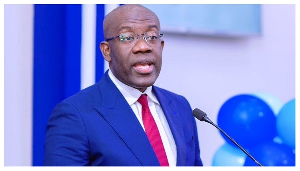
 Kojo Oppong Nkrumah is the Member of Parliament for Ofoase-Ayirebi
The Member of Parliament (MP) for Ofoase-Ayirebi and Ranking Member of Parliament’s Economy and Development Committee, Kojo Oppong Nkrumah, says Ghana’s recent decline in inflation could prove temporary if the government fails to address rising production costs, particularly electricity tariffs.
Speaking to Joy News, he argued that the latest inflation figure is not the result of stronger productivity or lower business costs, but rather tight monetary policies by the Bank of Ghana (BoG) that have reduced money in circulation.
According to him, the central bank’s aggressive liquidity controls have weakened consumer purchasing power, leading to lower demand and slower price increases.
“So there’s very little money for people to spend,” he explained, adding that many goods remain unsold simply because buyers cannot afford them.
His remarks follow new data from the Ghana Statistical Service showing inflation fell to 3.3 per cent in February 2026, one of the lowest rates in years.
While welcoming the drop, Oppong Nkrumah cautioned that it may not reflect genuine economic stability.
He stressed that inflation is driven not only by demand but also by the cost of production.
Yet he believes current policies focus too heavily on restricting spending while ignoring persistent cost pressures such as high utility tariffs, transport expenses and input prices.
A key concern, he noted, is electricity costs, with many businesses reporting power bill increases of between 24 and 28 percent.
These expenses, he warned, are gradually being passed on to consumers through higher prices.
Oppong Nkrumah cautioned that if these structural issues are not fixed, inflation could rebound sharply once monetary restrictions are eased.
Without reforms to lower production costs, he said, the current gains remain fragile and unsustainable.

Copyright © 1994 - 2026 GhanaWeb. All rights reserved.










