



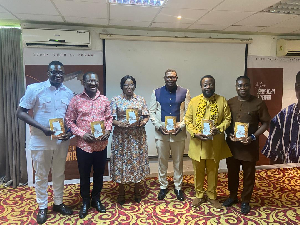
 A photograph from the event
Deputy Attorney-General Alfred Tuah-Yeboah has lamented the societal pressures that discourage honesty and integrity, stating that individuals who choose to remain corruption-free are often "tagged or ignored."
He made these remarks during the launch of Jerry-John N. Yenabi's new book, "This Thing Called Corruption", on Sunday, November 24, 2024, in Accra.
Addressing the audience, Tuah-Yeboah highlighted how deeply corruption is rooted in Ghanaian society, noting its damaging impact on governance and development.
"Corruption has taken centre stage in our country and affects us all. If you decide to stay corruption-free, people either tag you negatively or ignore you," he said.
He shared a personal anecdote to emphasize his point. "When I visit my family in Sunyani, I sometimes travel by VIP or STC buses. At bus stops, when I buy the same food everyone else is buying, people look at me strangely. They expect me to live a big man's life because of my position."
He described corruption as a societal pandemic, quoting the book's characterization of it as "a global pandemic, an addictive drug, and a creeping virus" undermining Ghana's future.
He warned that societal pressures, including the glorification of wealth and materialism, often push public officials to misuse resources, fearing they will be labelled "wicked or miserly" if they don't meet unrealistic expectations.
The book "This Thing Called Corruption" provides a detailed historical analysis of corruption in Ghana, tracing its evolution from independence to the present.
It critiques systemic failures, weak leadership, and cultural attitudes that promote unethical behaviour, such as nepotism, bribery, and the misuse of public resources.
Deputy Commissioner of the Commission on Human Rights and Administrative Justice (CHRAJ), Ms. Mercy Larbi, described the book as a wake-up call for Ghanaians.
She noted that corruption is not confined to government but is evident in homes, workplaces, and even religious institutions.
"Paying bribes for services, inflating invoices, and shielding wrongdoers are common practices that sustain corruption in society," she said.
Ms. Larbi stressed the need for cultural change, urging citizens to reject corrupt practices and prioritize transparency and accountability. "We must instil integrity in our children and set the right example in our own lives. Fighting corruption is a shared responsibility."
Divided into 12 chapters across four parts, the book examines campaign financing pressures, institutional weaknesses, and societal glorification of questionable wealth. It also critiques religious institutions for failing to promote ethical values.
Mr. Yenabi writes, "Our churches have failed on Sundays, mosques on Fridays, and shrines struggle to survive. Yet, we remain evil, greedy, and wicked."
Tuah-Yeboah echoed the book's central message: "By the time you finish reading, you'll realize you're either corrupt or likely to be corrupt."
He praised the book for inspiring readers to reflect on their roles in perpetuating corruption and urged them to see the fight against corruption as a shared duty.
The author, Jerry-John N. Yenabi, expressed hope that the book would provoke critical thought and inspire action. "This book is not about judging others," he said. "It is about inspiring everyone to take action. Corruption is personal; it affects all of us, and change must begin with each individual."
He called on Ghanaians to critically engage with the book's message, stating, "If Ghana is for us all, then let's commit to making her better."
AM/KA
Watch the latest episode of Everyday People on GhanaWeb TV below:

Copyright © 1994 - 2026 GhanaWeb. All rights reserved.










