



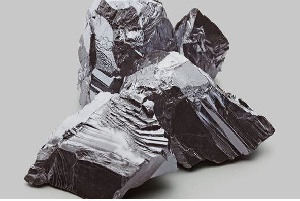
 A photo of lithium, one of Ghana’s key mineral resources
The Institute of Economic Affairs (IEA) has called on Parliament to stop the ratification of the lithium agreement between Ghana and Barari DV Ghana Limited, currently before the House.
The IEA said the agreement, in its current form, did not provide adequate value for the state.
The call follows Parliament’s claim that the 10 percent royalty rate secured by the previous government with Barari DV Ghana Limited breaches the Minerals and Mining (Amendment) Act, 2010, which stipulates a five percent royalty for such concessions.
Addressing a press briefing in Accra on Tuesday, Dr Charles Mensa, the Board Chairman of IEA, pointed out that mining agreements had generally skewed strongly in favour of investors, leaving the country unable to fully harness the economic value of its natural resources.
He noted that the persistent imbalance had contributed to Ghana’s recurring return to international support programmes, including engagements with the International Monetary Fund (IMF).
“Parliament must halt the ratification of the Revised Lithium Agreement between Ghana and Barari, currently before Parliament,” Dr Mensah said.
Cedi trades at GH¢11.42 to $1 on interbank market
“This is critical because the agreement in its current form is not only a continuation of the colonial-type agreements Ghana has had in its gold and oil sectors, but fails to comply with the requirements of major international frameworks signed and ratified by Ghana.”
“The United Nations General Assembly Resolution 1803 (1962), UN General Assembly Resolution 3281 (1974) and the African Charter on Human and Peoples’ Rights and Other Protocols all enjoin resource-endowed countries to exploit their resources for their benefit”.
The IEA, Dr Mensah noted, sought a review of the lithium agreement to ensure greater state and local ownership and control within those international frameworks.
Professor Aaron Mike Oquaye, the former Speaker of Parliament, said the current system where a country’s mineral wealth was given to foreign companies in exchange for royalties was a colonial heritage, which had never benefited the people.
The issue of royalties had never been a paradigm for the country’s sustainable development and industrialisation, he said.
Prof. Oquaye, therefore, emphasised the need for Ghana to take ownership of its natural resources, citing Norway, United Kingdom, and Dubai among other nations, which had chosen the nationalisation of their mineral wealth to achieve the maximum benefits.
Alhaji Inusah Fuseini, former Minister of Lands and Natural Resources, stated that the current lithium agreement before Parliament provided the country with a very good opportunity to renegotiate the whole contract.
“If Parliament claims the Lithium agreement was negotiated to give Ghana 10 percent royalty but the Minerals and Mining (Amendment) Act, 2010, stipulates five percent royalty for such concessions, then it means the law does support it,” he said.
“So, if that agreement itself is tainted by an illegality, why do we want to ratify it,” he queried.
All you need to know about Ghana's new vehicle number plates | BizTech:

Copyright © 1994 - 2026 GhanaWeb. All rights reserved.










