



 Inflation dropped to a record low in 2025
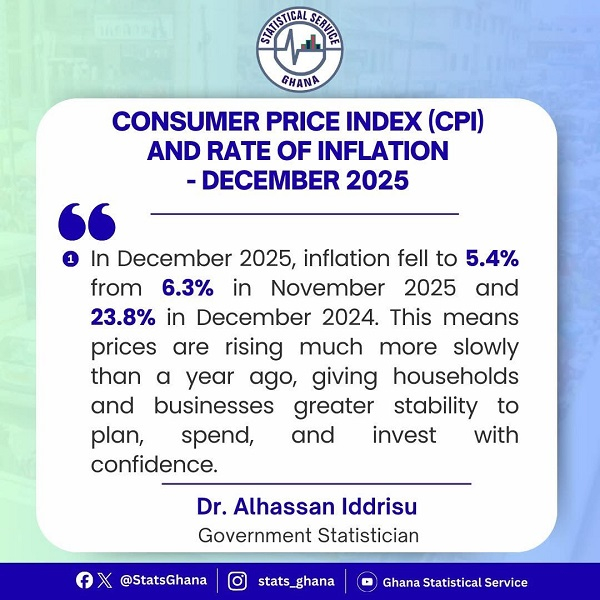
Ghana’s inflation rate dropped sharply to 5.4% in December 2025, down from 6.3% in November and a dramatic fall from the 23.8% recorded in December 2024, according to the latest data from the Ghana Statistical Service.
Announcing the figures on January 7, 2026, Government Statistician Dr Alhassan Iddrisu described the development as a major milestone in restoring price stability, with inflation now well within the Bank of Ghana’s medium-term target band of 8%.
The steep slowdown, from nearly 24% a year ago to single digits, signals growing macroeconomic stability and is expected to boost confidence among households, businesses, and investors by making costs more predictable.
Inflation for November drops to 6.3%
For many households, the slowdown in inflation could mean more stable food prices and fewer sudden increases in the cost of basic necessities. This stability allows families to plan their weekly and monthly spending with greater confidence, reducing the constant pressure of adjusting budgets in response to sharp price hikes.
Small traders and wage earners also stand to benefit from the more predictable economic environment. With slower price increases, business owners can plan inventory, pricing, and wages more effectively, while workers may find it easier to manage expenses without the fear that their incomes will be quickly eroded by rising costs.
The easing of inflation could also create room for lower interest rates, making borrowing cheaper for individuals and businesses. This may encourage investment, support business expansion, and improve access to credit for entrepreneurs who rely on loans to sustain or grow their operations.
However, the relief may not be evenly felt across all sectors. Transport costs and persistent supply-chain bottlenecks continue to affect prices in some areas, meaning that while inflation is falling on paper, many consumers may still experience pockets of high costs in their daily lives.
ID/BAI

Copyright © 1994 - 2026 GhanaWeb. All rights reserved.










