



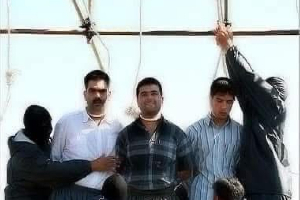
 Some prisoners getting executed in ancient Rome
In ancient Rome, going to the arena was not only about watching gladiators fight.
For thousands of spectators packed into amphitheatres such as the Colosseum, entertainment also meant witnessing real people die, sometimes in carefully staged scenes that resembled dramatic performances.
Historians say that during the midday portion of Roman games, known as the meridiani, condemned criminals were brought into the arena to be executed in front of the crowd.
These executions were not always carried out simply or quietly. Instead, they were often designed as theatrical spectacles, with the prisoners forced to take part in reenactments of famous myths or symbolic stories.
In some cases, a prisoner might be dressed as a legendary figure from Roman or Greek mythology, such as Orpheus or Hercules, and made to act out the character’s final moments.
But unlike in a stage play, the ending was real. The person would be killed by wild animals, burned alive, or executed by soldiers, all while the audience watched.
Ofori-Atta has applied to become a US permanent resident through his son - Kpebu claims
Roman writers, including the poet Martial, recorded scenes in which criminals were punished in this way. These performances blurred the line between punishment and entertainment, turning executions into dramatic shows meant to shock, impress and please the crowd.
Experts explain that this was part of a broader Roman culture that celebrated public spectacle.
Executions were used not only to punish crime, but also to send a message about the power of the state. By turning death into entertainment, the authorities reinforced their control and reminded citizens what happened to those who broke the law.
However, historians stress that this was not the same as normal theatre, where trained actors performed scripted plays. Professional theatre existed separately in Roman society.
The arena spectacles were more brutal, combining punishment, violence and storytelling into a form of mass entertainment.
Today, the idea that people were forced to die as part of a public “performance” continues to shock modern audiences.
But in ancient Rome, it was seen as a normal and even exciting part of public life.
FKA/AE

Copyright © 1994 - 2026 GhanaWeb. All rights reserved.










