



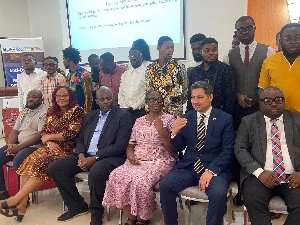
 The training brought together journalists, editors and civil society
The Ghana Anti-Corruption Coalition (GACC), in partnership with an Africa Centre for Energy Policy (ACEP)-led coalition and with funding support from the Foreign, Commonwealth & Development Office (FCDO), has held a one-day follow-up media training workshop aimed at strengthening journalists’ capacity to report effectively on governance and corruption issues.
The training brought together journalists, editors, civil society representatives and governance practitioners to enhance collaboration and improve the quality of accountability reporting across the country.
The workshop on February 18, 2026, targeted journalists who participated in the 2024 media training programme. It sought to deepen participants’ understanding of governance reforms, improve their analytical skills and build networks that support investigative and data-driven reporting.
Organisers noted that transparent governance is reinforced when anti-corruption reforms are clearly communicated and subjected to public scrutiny.
The engagement also promoted constructive dialogue between the media and state institutions to ensure greater clarity and public debate on reform initiatives.
Executive Secretary of GACC, Beauty Emefa Narteh, urged participants to translate their training into measurable impact through responsible and results-oriented reporting.
She observed that "many of the participants do not belong to traditional media houses that often have greater access to capacity-building programmes", stressing the importance of demonstrating value for the investment made in their development.
Narteh emphasised that "accountability applies not only to public officials but also to journalists who benefit from professional training."
She encouraged honest feedback to help shape future initiatives and expressed optimism that the programme would strengthen the media’s role in the fight against corruption.
Policy Lead for Petroleum and Conventional Energy at ACEP, Kodzo Yaotse, explained that the training forms part of broader efforts to build a governance ecosystem where informed journalism complements institutional reforms.
He noted that corruption reporting, particularly in technical sectors such as extractives, requires specialised knowledge.
He commended participants for applying lessons from earlier sessions in their professional work.
Head of Political and Governance at FCDO, Hooman Nouruzi, described corruption as both a moral and developmental challenge that undermines public trust and diverts resources from essential services.
He stressed that a strong, independent and ethical media remains one of the most effective tools in combating corruption. According to him, investigative reporting and data-driven journalism play a critical role in shaping public policy dialogue and strengthening democratic institutions.
He reaffirmed the United Kingdom’s commitment to supporting Ghana’s transparency and accountability agenda.
Project Director of The Democracy Project, Dr John Osae-Kwapong, highlighted worrying governance trends, noting that Ghana’s performance on the Transparency International Corruption Perceptions Index has shown little substantive improvement in recent years.
He also cited findings from Afrobarometer indicating growing public perception of corruption and concerns about weak accountability mechanisms and possible retaliation against whistleblowers.
Additionally, he referenced the Mo Ibrahim Foundation Ibrahim Index of African Governance, which points to institutional gaps in accountability and procurement systems.
Data from the National Commission for Civic Education further reveal troubling attitudes, with about one-third of respondents believing that paying a bribe for entitled services is not wrong, and two in ten seeing nothing improper in public officials using their positions to benefit relatives and associates.
Dr Osae-Kwapong stressed that tackling corruption requires not only institutional reforms but also sustained civic education and moral reorientation.
Executive Director of the Ghana Integrity Initiative, Mary Awelana Addah, underscored the importance of citizen participation and collective action in anti-corruption efforts.
She encouraged journalists to document their experiences and collaborate with civil society organisations, noting that silence and fear weaken reform processes. Structured advocacy grounded in research and transparency, she added, is essential for meaningful change.
The training forms part of the Anti-Corruption Institute for Enhancing Governance and Accountability in Ghana, an initiative designed to promote good governance, strengthen public accountability, and usher in a new phase of impactful, evidence-based journalism in the country.
AM
Cabinet instructs COCOBOD to begin repayment to all affected cocoa farmers

Copyright © 1994 - 2026 GhanaWeb. All rights reserved.










