



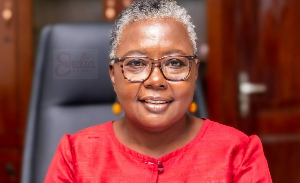
 Emelia Arthur is the Minister of Fisheries and Aquaculture
The Minister of Fisheries and Aquaculture, Emelia Arthur, has outlined an ambitious agenda to transform Ghana’s fisheries and aquaculture sector, with emphasis on sustainability, modernisation, and women’s empowerment.
Speaking at the National Forum on Women in Government and Media on February 19, 2026, the Minister described her appointment as both an honour and a responsibility, noting that the sector feeds the nation, sustains livelihoods, and supports coastal and riverine communities across the country.
She said fisheries and aquaculture play a vital role in food security, poverty reduction, and economic growth, adding that women are central to the sector’s operations.
“Across our landing sites, markets, and processing centres, women are the backbone of this sector as processors, traders, entrepreneurs, and community leaders,” she said, pledging to ensure their contributions are recognised, strengthened, and protected.
Emelia Arthur explained that since assuming office, her focus has been anchored on three key pillars: sustainability, modernisation, and inclusivity.
On sustainable resource management, the sector minister stressed the need to protect oceans, rivers, and lakes from overfishing, illegal fishing, and environmental degradation.
Fisheries sector moves to close US$800 million annual supply gap
According to her, strengthening enforcement, improving data collection, and promoting responsible fishing practices are critical to safeguarding the future of the sector.
She also identified aquaculture as the future of fish production in Ghana, adding that the ministry is working to support fish farmers with improved fingerlings, quality feed, access to finance and extension services, as well as modern production techniques to increase output and reduce dependence on imports.
Emelia Arthur indicated plans to boost value addition by strengthening local processing, cold-chain systems, and market access.
She said this strategy is expected to create jobs, particularly for young people and women, while increasing foreign exchange earnings.
Emelia Arthur further assured fishing communities of the government’s commitment to improving infrastructure at landing sites, enhancing safety at sea, expanding insurance coverage, and introducing social protection measures for vulnerable households.
“Our fishermen and fish farmers must operate safely and profitably,” she stated.
Arthur disclosed that the Ministry has worked to enact a new law that reflects current realities in the sector.
She noted that collaboration has been strengthened with research institutions, regional bodies, and development partners to ensure policies are backed by science and best practice.
Arthur also acknowledged the role of the media in shaping public understanding of fisheries issues. She emphasised that journalists help educate the public on sustainable fishing practices, raise awareness about closed seasons and conservation measures, and counter misinformation that could harm livelihoods and markets.
“I want to work closely with you to promote accurate, science-based reporting on fisheries and aquaculture issues,” she said.
She announced that the Ministry will continue provide timely and transparent information on policies and regulations, organise regular press briefings, facilitate field visits to landing sites and fish farms, and make technical experts available to explain complex matters such as stock assessments, aquaculture technology, and climate impacts.
AK/MA

Copyright © 1994 - 2026 GhanaWeb. All rights reserved.










