



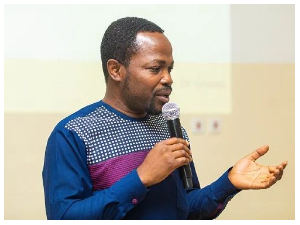
 Professor Fred Dzanku is a Development Economist
A Development economist, Fred Dzanku, has cautioned that although Ghana’s economy is showing signs of stabilising, it cannot yet be described as resilient, urging policymakers and the public to avoid becoming complacent about the recent progress.
Speaking on JoyNews’ Newsfile on Saturday, March 21, 2026, Dzanku offered a measured response to comments by John Dramani Mahama, who has stated that the economy is now more resilient than in previous years.
Dzanku acknowledged the improvement but stressed the need for a deeper, long-term perspective.
He explained that economic resilience is about how well a system can withstand shocks without major disruptions.
“If an economy is resilient, it should be able to withstand shocks without large swings,” he said, adding that resilience is not something achieved overnight but built steadily over time.
Ghana's economy remains fragile despite recent recovery - Economist
According to him, three key factors determine resilience: how well the economy absorbs shocks, how quickly those shocks spread through the system, and the strength of its financial buffers.
He noted that Ghana has made some gains, especially with foreign exchange reserves.
“The data shows that we are in a better position than we were a couple of years ago,” he said, pointing to improved reserves and strong gold performance as helpful cushions.
Despite these gains, Dzanku raised concerns about Ghana’s weak fiscal space. With a tax-to-GDP ratio of about 15 percent, he said revenue generation remains a major challenge.
“What this means is that the economy is not generating enough revenue,” he explained. “Even if reserves are looking relatively healthy, weak fiscal space undermines overall resilience.”
He also warned about how quickly external shocks affect the local economy, especially fuel price changes. His analysis shows that a 10 percent rise in fuel prices can push food inflation up by about 6 percent within two months.
“When fundamentals are weak, shocks transmit very quickly,” he said. “That is a sign of vulnerability within the system.”
Dzanku stressed that stabilisation should not be mistaken for resilience.
“I would say Ghana’s economy is stabilising,” he noted. “But I wouldn’t say it is resilient yet. Resilience is something that is built into the system over time.”
He added that although the President’s comparison is fair, “It does not mean we are safe,” urging continued reforms and disciplined economic management as Ghana moves gradually from instability toward true resilience.
SO/EB
Meanwhile, watch as Dr Nyaho-Tamakloe scores Mahama govt high, only next to Nkrumah’s in the video below:

Copyright © 1994 - 2026 GhanaWeb. All rights reserved.










