



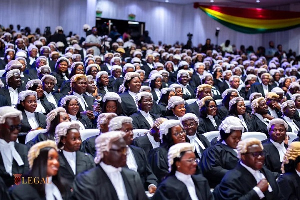
 File photo of lawyers
The Parliament of Ghana, on Thursday, March 26, 2026, passed the Legal Education Bill, paving the way for major reforms in Ghana's legal training system.
The bill, which now awaits presidential assent to become law, introduces significant changes to how aspiring lawyers are trained and prepared for the Ghana Bar, in fulfilment of a campaign promise by President John Dramani Mahama.
Many legal experts, including US-based legal luminary Prof Stephen Kwaku Asare, popularly known as Kwaku Azar, and Prof H Kwasi Prempeh of CDD-Ghana, have touted the passage of the bill, saying it breaks the monopoly of legal education in the country.
They have said that if the bill becomes law, as expected, it would address the structural bottlenecks and limited capacity in Ghana's legal education system, which have historically restricted access for law graduates aspiring to become lawyers.
But what exactly would the new bill bring? Here is a breakdown of how it would change legal education in Ghana.
Abolish the Ghana School of Law system:
Currently, any person who wants to practise law in Ghana must go through the Ghana School of Law, which is popularly known as “Makola”.
The Attorney General and Minister of Justice, Dr Dominic Ayine Akuritinga, who introduced the bill to Parliament, while giving details of it to the House, pointed out that the new bill, if passed, will replace the Ghana School of Law system.
This implies that prospective lawyers, after obtaining their law degree (LLB) from the various universities offering law courses in the country, would not be required to attend the Ghana School of Law (Makola) to pass the Bar.
3 years of legal education:
Dr Ayine also indicated that the new system will require prospective lawyers to have three years of legal education to obtain their degree, the Bachelor of Laws (LLB).
Clinical legal programme:
LLB graduates, under the new law, will be required to take the clinical legal programme, also known as the Bar Practice Course, at their respective institutions for another academic year.
National Bar Exam:
Dr Ayine pointed out that after taking the clinical legal programme, all LLB graduates will take the National Bar Examination to become lawyers.
“Everybody who has the LLB and who has taken the bar practice course in their university will be entitled to write the National Bar Exam. So, it will be like what the accountants do. Once you qualify to write the examination, the Chartered Institute of Accountants will administer the exam, and everybody can write. If you pass, you become a chartered accountant. That is what is going to happen in order to expand legal education in the country,” he explained.
Parliament passes Legal Education Bill 2025
BAI
Why US voted against Ghana’s resolution to declare slavery a crime against humanity

Copyright © 1994 - 2026 GhanaWeb. All rights reserved.










