



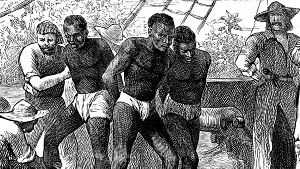
 The United Nations General Assembly passed Ghana's resolution on reparatory justice
On March 25, 2026, the United Nations General Assembly declared the transatlantic slave trade a grave crime against humanity, following a motion spearheaded by Ghana’s President, John Dramani Mahama.
President Mahama has been at the forefront of global calls for reparatory justice for African nations and descendants of enslaved Africans.
Following the landmark resolution—which saw 123 member states vote in favour, three against, and 52 abstain—several international media outlets reported on the historic development.
Here is how they covered the news:
BBC: UN votes to recognise enslavement of Africans as 'gravest crime against humanity'
The United Nations General Assembly has voted to recognise the enslavement of Africans during the transatlantic slave trade as "the gravest crime against humanity", a move advocates hope will pave the way for healing and justice.
FULL TEXT: Read Ghana’s UN resolution on slavery that defied the West
The resolution - proposed by Ghana - called for this designation, while also urging UN member states to consider apologising for the slave trade and contributing to a reparations fund. It does not mention a specific amount of money.
The proposal was adopted with 123 votes in favour and three against - the United States, Israel, and Argentina.
Fifty-two countries abstained, including the United Kingdom and European Union member states.
Countries like the UK have long rejected calls to pay reparations, saying today's institutions cannot be held responsible for past wrongs.
Unlike UN Security Council resolutions, those from the General Assembly are not legally binding, though they carry the weight of global opinion.
"Let it be recorded that when history beckoned, we did what was right for the memory of the millions who suffered the indignity of the slave trade and those who continue to suffer racial discrimination," Ghana's President John Mahama told the assembly ahead of the vote.
'Who sold the slaves?' - Manasseh challenges Mahama's call for reparations to Africa'Who sold the slaves?' - Manasseh challenges Mahama's call for reparations to Africa
"The adoption of this resolution serves as a safeguard against forgetting. It also challenges the enduring scars of slavery," he said.
Aljazeera: UN passes resolution naming slave trade ‘gravest crime against humanity’
A United Nations resolution, proposed by Ghana, to recognise transatlantic slavery as the “gravest crime against humanity” and calling for reparations, has been adopted despite pushback from Europe and the United States.
At a UN General Assembly (UNGA) vote on Wednesday, 123 countries supported the resolution, which is not legally binding but carries political weight, while three opposed it, including the US and Israel, and 52 abstained, including the United Kingdom and European Union countries.
Ghana said the resolution was needed because the consequences of slavery, which saw at least 12.5 million Africans abducted and sold between the 15th and 19th centuries, persist today, including racial disparities.
Ghana’s President John Dramani Mahama, a key architect of the resolution, said the resolution’s passing was “a route to healing and reparative justice”.
“The adoption of this resolution serves as a safeguard against forgetting … Let it be recorded that when history beckoned, we did what was right for the memory of the millions who suffered the indignity of slavery.”
France24UN designates slave trade as ‘gravest crime against humanity’ despite US opposition
The UN General Assembly on Wednesday designated the transatlantic African slave trade as "the gravest crime against humanity" despite opposition by the United States and some European countries.
In a move advocates hailed as a step towards healing and possible reparations, the resolution was adopted to applause by a vote of 123 in favour, three against, and 52 abstentions.
The United States, Israel, and Argentina opposed the measure while Britain and EU member states abstained.
Ghana's President John Mahama, one of the African Union's most vocal supporters of slavery reparations, was at the United Nations headquarters in New York to support the vote.
"Today, we come together in solemn solidarity to affirm truth and pursue a route to healing and reparative justice. The adoption of this resolution serves as a safeguard against forgetting," said Mahama.
Despite being non-binding, the resolution goes beyond simple acknowledgement and asks nations involved in the slave trade to engage in restorative justice.
It also highlights the legacy of slavery via "the persistence of racial discrimination and neo-colonialism" in today's society.
JHM/BAI
Why US voted against Ghana’s resolution to declare slavery a crime against humanity

Copyright © 1994 - 2026 GhanaWeb. All rights reserved.










