



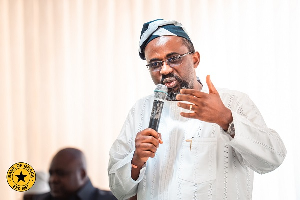
 Dr Johnson Pandit Asiama is the Governor of BoG
The Bank of Ghana incurred significant costs in 2025 to reduce inflation to 5.4 per cent through tight monetary policy, Governor Dr Johnson Pandit Asiama has said.
He said the disinflation effort, though successful, required aggressive liquidity management, including open market operations to mop up excess funds from the system.
"Last year was good but expensive for the Central Bank. It took us a lot of money to mop up excess liquidity and bring inflation down," Dr Asiama said at the Governor's Roundtable during the Kwahu Business Forum, where he outlined the policy trade-offs involved in balancing inflation control with economic growth.
"The work we do is always about trade-offs... trying to strike the right balance," he said.
Dr Asiama explained that while tight monetary policy helped reduce inflation from 23.8 per cent in December 2024 to 5.4 per cent by the end of 2025, it came with high financial costs to the Central Bank.
He said exchange rate stability was a key outcome of the policy measures, noting that "the cedi is stable and under control."
The Governor, however, expressed optimism that maintaining low inflation in 2026 would be less costly due to improved macroeconomic conditions.
"If you look at where inflation was at the end of December 2024 and where it is now, it would not involve the same level of resources to keep it low and stable going forward," he added.
Dr Asiama noted that central banks globally, including the US Federal Reserve and the European Central Bank, face similar challenges, as tools used to control inflation often carry high financial costs.
He stressed that despite the cost implications, controlling inflation remains critical to protecting real incomes and ensuring macroeconomic stability.
Dr Asiama also underscored the importance of a strong financial sector, stating that improved bank resilience would boost credit to businesses and support growth.
"When banks are strong, they can give more credit, and there is the need for collaboration between the Central Bank and the financial sector," he said.
Dr Asiama assured the business community that the Bank of Ghana would continue to pursue policies aimed at sustaining low inflation while supporting economic expansion.

Copyright © 1994 - 2026 GhanaWeb. All rights reserved.










