



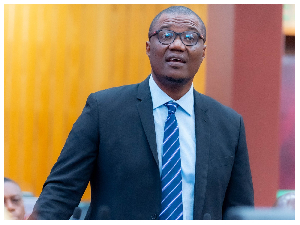
 Dr Nana Ayew Afriye is the Ranking Member on Parliament's Health Committee
The Ranking Member on Parliament’s Health Committee, Dr Nana Ayew Afriye, has strongly criticised the government’s planned allocation of GH¢1.2 billion annually to the proposed Free Primary Healthcare programme, describing the move as a misplaced priority.
Speaking to GhanaWeb, he questioned the rationale behind the policy, particularly at a time when several critical healthcare infrastructure projects remain incomplete.
His remarks follow disclosures by the Minister of Health on the projected annual cost of the programme, which is aimed at expanding access to basic healthcare services across the country.
Dr Ayew Afriye argued that Ghana already has an existing framework for delivering primary healthcare through Community-based Health Planning and Services (CHPS) compounds, supported by community health workers and auxiliary nurses.
No fees for new primary healthcare as only National ID required – Akandoh
According to him, the issue is not a lack of public awareness about preventive healthcare, as education is already ongoing at the community level.
“Who doesn’t know about good dietary behaviour to reduce non-communicable diseases such as hypertension and diabetes? Who doesn’t know about promotive healthcare? There are community health workers or auxiliary nurses who continuously educate people,” he stated.
The lawmaker further expressed concern over the condition of existing health facilities, noting that many district hospitals continue to operate in outdated structures, including colonial-era buildings and repurposed CHPS compounds.
He insisted that the government’s immediate focus should be on completing ongoing hospital projects under the Agenda 111 initiative, which was launched to address gaps in healthcare infrastructure nationwide.
He added that this would help reduce excessive referrals to regional and tertiary hospitals, thereby addressing the “no bed syndrome.”
It would also create both direct and indirect employment opportunities for health workers and support staff.
“The most important thing is that every place has a CHPS compound and a health centre. What they lack are modern district hospitals,” he emphasised.
He further noted that the Network of Practice (NoP), introduced under the previous administration, is designed to make specialists available at the community level.
Dr Ayew Afriye proposed a phased approach to completing Agenda 111 projects over the next decade, arguing that such a strategy would yield more sustainable and impactful results.
“You have invested nearly GH¢4.7 billion into Agenda 111, yet many of the projects remain uncompleted at various stages, with some nearing completion. Because of political reasons, this has been abandoned, and now the NDC government is committing GH¢1.2 billion annually to a new, so-called politically motivated Free Primary Healthcare programme,” he added.
While acknowledging the importance of strengthening primary healthcare, he stressed the need for a more balanced and strategic allocation of resources, prioritising the completion of critical infrastructure already underway before introducing new large-scale spending commitments.
The 4 reasons Justice Dorgu is under fire over judgement in RNAQ divorce case:

Copyright © 1994 - 2026 GhanaWeb. All rights reserved.










