



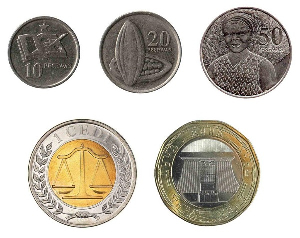
 Traders in Aflao, Denu reject pesewa coins, sparking tension with customers
Some residents in the Ketu South Municipality of the Volta Region have expressed concern over the increasing refusal by some shop owners to accept 10 and 20 pesewa coins as legal tender, a situation that is causing tension between traders and customers.
Some residents told the Ghana News Agency (GNA) that the practice had led to frequent confrontations during routine transactions, particularly in Aflao and Denu.
Kelvin Fianoo, a resident, recounted how he was involved in a prolonged disagreement with a shop owner who refused to accept the coin after he purchased sachet water.
According to him, the argument lasted for about 20 minutes, but the trader insisted on rejecting the coin, citing similar experiences where other customers and traders had also refused to accept it.
“She told me that if she takes it, others will not accept it from her, so she refused completely,” he said.
Checks conducted by the GNA in parts of Aflao and Denu confirmed that many shop owners and attendants were unwilling to accept the coins, often explaining that they faced difficulties using them in subsequent transactions.
Some traders indicated that the rejection had become widespread, making it challenging for them to keep or circulate the coins.
Meanwhile, the Bank of Ghana (BoG) has cautioned traders against the practice, describing the refusal to accept pesewa coins as illegal.
In a publication following its March 2026 bi-monthly media engagement, the Central Bank emphasised that coins, including one pesewa, five pesewas, 10 pesewas and 20 pesewas, remain legal tender and must be accepted for all transactions.
The Bank further stated that under the Currency Act, 1964 (Act 242), no individual or business entity is permitted to reject officially issued currency when offered as payment.
Residents have therefore called on the Bank of Ghana and relevant authorities to intensify public education and enforcement measures to ensure compliance, including possible sanctions to deter offenders.
They expressed the view that addressing the issue would help restore confidence in the use of coins and reduce unnecessary disputes in daily commercial activities.

Copyright © 1994 - 2026 GhanaWeb. All rights reserved.










