



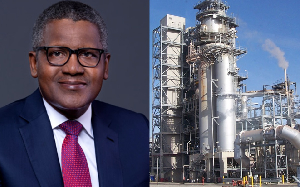
 Aliko Dangote's refinery has become Africa’s largest oil producer
For the first time in history, Nigeria, Africa’s largest oil producer, has become a net petrol exporter — a monumental shift spearheaded by the Dangote Petroleum Refinery & Petrochemicals. After decades of exporting crude oil and importing refined products, this equation has been fundamentally changed by Aliko Dangote.
In March 2026, the refinery’s exports of petrol reached 44,000 barrels per day, creating a surplus of approximately 3,000 barrels per day and thereby exceeding the volume of domestic imports.
According to Billionaires Africa, Nigeria, once a major crude oil exporter, could not refine enough for its own domestic needs — a long-standing contradiction. This meant the country was structurally dependent on imported fuel, which drained foreign exchange and made it vulnerable to global supply shocks.
That era, however, appears to be ending.
The smooth operations of the Dangote Refinery, according to Dangote, were made possible by the supportive policy environment under President Bola Tinubu’s administration. He specifically cited reforms that bolstered investor confidence in the energy sector as crucial for making such a massive domestic refining project feasible.
The facility, which is the world’s largest single-train refinery, is capable of processing 650,000 barrels per day. In a recent milestone, the refinery received its second-highest crude intake since commencing operations in late 2023 — about 565,000 barrels per day of crude in March.
As the refinery increased production, Nigeria’s reliance on imported petrol sharply dropped. In March, imports hit a record low of 41,000 barrels per day, according to market intelligence firm Kpler.
The Dangote Refinery is now enabling Nigeria to export its petrol surplus to new markets. For instance, the refinery made its first delivery to East Africa in March, shipping 317,000 barrels of petrol to Mozambique. A second shipment is expected to reach Beira in April. This shift reflects an increasing interest from East African buyers who are seeking alternatives to Middle East supply due to ongoing geopolitical instability.
The significance of this development extends far beyond Nigeria. Analysts predict that this export achievement will boost Nigeria’s foreign exchange earnings, thereby strengthening its external financial position and reducing strain on the naira. Moreover, Nigeria’s entrance into the international refined product market introduces a new, competitive element to global trade flows, which could notably impact Europe’s already saturated petrol market.
Recently, experts in oil and gas called for stronger collaboration among African leaders to ensure the continent maximises its oil and gas resources.
Speaking to the Africa Media Extractives Fellows in Ghana, Edmond Kombat, the Tema Oil Refinery (TOR) MD, noted that Africa is particularly vulnerable to external shocks, stating that global conflicts negatively impact the continent’s oil performance to a disproportionate degree.
To protect against potential instability from international tensions, such as the current situation involving Iran, Kombat proposed setting an African benchmark price.
Additionally, Kombat suggested channelling crude oil transactions to African domestic refineries as a means to keep premium prices affordable for other African nations.

Copyright © 1994 - 2026 GhanaWeb. All rights reserved.










