



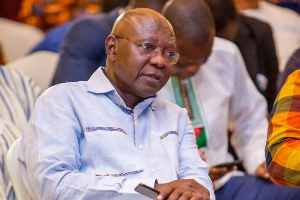
 Akwasi Opong-Fosu is a Governance expert and decentralisation specialist
Governance expert and decentralisation specialist, Akwasi Opong-Fosu, has weighed in on the events that led to the June 4 Uprising.
He indicated that the happenings at the time which led to the bloody incident cannot be fully appreciated by persons who did not experience the situation at the time.
Speaking on JoyNews on Thursday, June 4, 2026, Opong-Fosu said although the uprising sought to promote probity, accountability and social justice, the use of military force failed to fundamentally transform Ghana’s governance culture.
Reflecting on the events that followed the uprising, including executions and punitive actions against persons deemed responsible for the country’s difficulties at the time, he said the lessons from June 4, 1979, should go beyond the brutality often associated with it.
“The lesson I draw from it is that you cannot change a nation’s culture with a gun,” he indicated.
According to him, the values of accountability, integrity and social justice must be deliberately taught and embraced by society rather than imposed through fear or force.
“Issues of values and belief systems are embraced; they are taught. For the 112 days, it was more out of fear when people were not doing the things that created that situation of shortages, inequality and all that. People were abiding by the rules because of the gun,” he said.
Opong-Fosu argued that despite Ghana’s transition to democratic governance, many of the root causes that triggered the June 4 intervention still persist.
“Now, without the gun, we are in a democratic era, but the root of the issue is still there,” he added.
He lamented that national conversations about June 4 have often focused narrowly on its violent aftermath, including the execution of former heads of state, while overlooking the underlying concerns over corruption, inequality and accountability that fuelled the uprising.
Opong-Fosu called for renewed national dialogue on the lessons of the event, urging institutions such as the National Commission for Civic Education, traditional authorities, religious leaders and the media to promote the values of probity, accountability and social justice.
Today in History: The genesis, bloodshed and legacy of 1979 uprising
He stressed that Ghana already has laws and institutions to ensure accountability, but societal attitudes and partisan divisions continue to weaken efforts to uphold these principles.
“Resources that could have built highways, if they are diverted by a few individuals, it affects the whole country,” he said.
Today marks the 47th anniversary of the June 4 Revolution; otherwise known as the June 4 Uprising, a pivotal and highly polarising flashpoint in Ghana's political history.
What began as an internal military mutiny quickly transformed into a national upheaval that reshaped the trajectory of the Fourth Republic.
The roots of the uprising trace back to May 15, 1979, when Flight Lieutenant Jerry John Rawlings, alongside a group of junior military officers, launched a failed coup against the ruling Supreme Military Council II (SMC II).
The mutiny was swiftly quelled following an exchange of fire between the plotters and government loyalists.
It took the intervention of a senior military officer, Major-General Odartey Willington, to secure the Ghana Broadcasting Corporation (GBC) and announce that the coup had been foiled.
Led by then Flight Lieutenant Jerry John Rawlings, the uprising was driven by widespread public anger over corruption, economic hardship, and what the coup leaders described as poor governance.
MRA/VPO
AROUND TOWN: Residents cry for help as heavy floods displace homes:

Copyright © 1994 - 2026 GhanaWeb. All rights reserved.










