



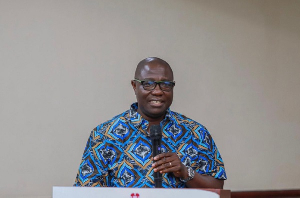
 Deputy Chief Executive of the Ghana Cocoa Board, Ato Boateng
The Deputy Chief Executive of the Ghana Cocoa Board (COCOBOD), responsible for Finance and Administration, Ato Boateng, has disclosed that significant progress has been made towards implementing a new locally financed funding mechanism aimed at raising working capital through the issuance of commercial paper.
Speaking in an interview on the sidelines of the Ghana–UK Investment Summit in London, Boateng revealed that pension funds, commercial banks, international buyers and other strategic players within the cocoa value chain have been identified as key sources of financing for the initiative.
He noted that preparations for the programme are at an advanced stage, with plans to launch the facility ahead of the 2026/2027 cocoa crop season.
“We have made significant progress and engaged all the necessary advisors to support the issuance process. The advisors are working diligently to finalise the financing structure, which is now at an advanced stage, while addressing all regulatory requirements and concerns raised by the relevant authorities,” he stated.
The proposed financing framework marks a significant departure from COCOBOD’s traditional funding model and forms part of the Government of Ghana’s broader agenda to transition from the syndicated loan arrangement that has underpinned cocoa financing for more than three decades.
According to Boateng, pension funds have emerged as one of the most promising sources of capital under the new model. Other financing avenues under consideration include commercial banks and private placements involving international buyers and stakeholders across the cocoa value chain.
He described the proposed arrangements as innovative financing solutions designed to strengthen the resilience and long-term sustainability of Ghana’s cocoa sector.
“We need to be innovative in our approach because we also want commercial banks to play an active role. To achieve this, we are exploring opportunities to bring Development Finance Institutions on board to enhance the lending capacity of participating banks,” he explained.
Boateng further highlighted the distinctive features of the financing framework, noting that the proposed tranche-based drawdown structure would improve operational efficiency while reducing unnecessary borrowing costs.
“The objective is to structure the financing in tranches, enabling us to draw down only the funds required for cocoa purchases at any given time. Once those funds are no longer needed, we can repay investors promptly, ensuring prudent utilization of resources and minimizing financing costs,” he said.
The new financing model has also received strong backing from the Minister for Finance, Dr Cassiel Ato Forson, and the Governor of the Bank of Ghana, Dr. Johnson Asiamah. Both officials have commended the initiative, describing it as a well-structured and forward-looking approach that offers significant advantages over existing financing arrangements.
The reforms come at a critical time for Ghana’s cocoa industry, amid growing public discourse on the sector’s future, including concerns from farmers regarding producer prices, financing sustainability, productivity, and the long-term competitiveness of the country’s cocoa economy.
Industry observers view the proposed commercial paper programme as a potentially transformative development that could deepen domestic participation in cocoa financing, reduce reliance on external borrowing, strengthen local capital markets and support the broader objective of building a more sustainable and resilient cocoa sector.

Copyright © 1994 - 2026 GhanaWeb. All rights reserved.










