



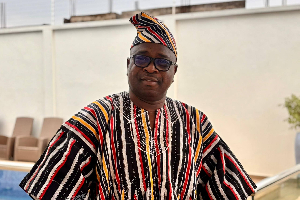
 Seidu Issifu, will partake in the Sixty-Fourth Sessions of the Subsidiary Bodies (SB64)
The Minister of State for Climate Change and Sustainability, Seidu Issifu, will participate in the Sixty-Fourth Sessions of the Subsidiary Bodies (SB64) of the United Nations Framework Convention on Climate Change (UNFCCC), scheduled to take place from June 8 to June, 2026 in Bonn, Germany.
The Bonn Climate Conference is one of the most significant annual gatherings under the global climate governance framework and serves as a critical platform for advancing negotiations and technical discussions related to the implementation of the Paris Agreement.
The conference brings together ministers, chief negotiators, climate experts, development partners, civil society organizations, youth representatives, financial institutions, researchers, and private sector stakeholders from across the world to deliberate on key climate issues and chart pathways toward a more sustainable future.
The participation of the Minister of State for Climate Change and Sustainability reflects Ghana's unwavering commitment to addressing climate change and contributing constructively to international efforts aimed at limiting global warming, enhancing resilience, and promoting sustainable development.
It also demonstrates the Government's determination to ensure that Ghana's interests and priorities are effectively represented in global climate decision-making processes. Importance of the Bonn Climate Conference.
The Bonn Climate Conference serves as an important milestone in the annual climate negotiation calendar and provides the foundation for decisions that will subsequently be considered and adopted at future Conferences of the Parties (COP). Discussions and outcomes from the conference help shape international climate policies, financing arrangements, adaptation frameworks, and implementation mechanisms that directly affect developing countries.
This year's conference comes at a particularly important moment as countries intensify efforts to meet the goals of the Paris Agreement and respond to the increasingly severe impacts of climate change.
Around the world, nations are experiencing rising temperatures, prolonged droughts, devastating floods, biodiversity loss, coastal erosion, and growing threats to food and water security.
Developing countries, particularly those in Africa, continue to bear a disproportionate burden despite contributing minimally to global greenhouse gas emissions. For Ghana, climate change remains one of the most pressing development challenges of our time.
The country continues to face climate-related impacts including erratic rainfall patterns, declining agricultural productivity, increasing flood risks, land degradation, coastal erosion, and threats to livelihoods and infrastructure.
These challenges underscore the importance of active participation in international climate negotiations and the pursuit of collaborative solutions that support national development objectives.
Ghana's Objectives at SB64 at the conference, Ghana will seek to advance several national and continental priorities while contributing to constructive dialogue on global climate action.
Among the key objectives of Ghana's participation are: Strengthening Climate Adaptation Efforts. Ghana will continue to advocate for increased global support for adaptation initiatives, particularly in developing countries that are highly vulnerable to climate impacts.
The country will emphasize the urgent need for investments in climate-resilient agriculture, water resource management, coastal protection, disaster risk reduction, ecosystem restoration, and resilient infrastructure.
The Minister will highlight the importance of adaptation as a development priority and call for greater financial and technical support to help vulnerable communities build resilience against climate-related shocks.
Advancing Climate Finance Mobilization Climate finance remains a critical enabler of effective climate action. Ghana will engage development partners, financial institutions, and climate funds to explore opportunities for increased investment in climate-resilient and low-carbon development.
The Minister will advocate for improved access to climate finance for developing countries and support ongoing discussions aimed at ensuring that climate finance commitments are fulfilled in a transparent, predictable, and equitable manner.
Ghana will also seek to strengthen partnerships that can facilitate access to grants, concessional financing, and innovative financing mechanisms to support the implementation of national climate priorities.
Promoting Ghana's Climate Ambitions. The conference will provide an opportunity for Ghana to showcase progress made in implementing its Nationally Determined Contributions (NDCs) under the Paris Agreement.
Ghana has made notable strides in strengthening climate governance, promoting renewable energy development, improving environmental sustainability, advancing sustainable land-use practices, and integrating climate considerations into national planning processes.
The Minister is expected to highlight ongoing initiatives that support emissions reduction, enhance climate resilience, and contribute to sustainable economic transformation. Supporting Carbon Market Development.
As global discussions on carbon markets continue to evolve, Ghana remains committed to ensuring environmental integrity, transparency, and sustainable development benefits in carbon market transactions.
The Minister will engage stakeholders on opportunities for international cooperation under Article 6 of the Paris Agreement and explore avenues for attracting climate investments that contribute to sustainable development while supporting national mitigation efforts.
Enhancing International Cooperation Climate change is a global challenge that requires collective action. Ghana will use the conference as an opportunity to strengthen partnerships with governments, international organizations, development agencies, research institutions, and private sector actors.
These engagements are expected to foster knowledge exchange, technology transfer, capacity building, and investment opportunities that support Ghana's climate resilience and sustainable development agenda.
Bilateral Engagements and Strategic Partnerships Beyond the formal negotiations, the Minister is expected to hold a series of bilateral meetings with representatives of governments, multilateral institutions, climate funds, development partners, and international organizations.
These engagements will focus on strengthening cooperation in areas such as climate finance, renewable energy development, sustainable agriculture, forest conservation, nature-based solutions, waste management, green industrialization, and climate-smart infrastructure development.
The meetings will also provide an opportunity to discuss Ghana's emerging priorities in climate policy implementation and identify opportunities for collaboration that can accelerate national climate action.
Ghana's Leadership in Climate Action Ghana continues to demonstrate leadership in climate governance at both regional and international levels. The establishment of the Office of Minister of State for Climate Change and Sustainability reflects the Government's commitment to elevating climate action as a national priority and ensuring coordinated implementation across sectors.
The Ministry is working closely with government institutions, local authorities, development partners, civil society organizations, youth groups, academia, and the private sector to promote integrated climate solutions that support economic growth, environmental sustainability, and social inclusion.
Through strategic policy interventions and international engagement, Ghana seeks to position itself as a leader in climate resilience, green growth, and sustainable development across Africa.
A Call for Collective Action. As the impacts of climate change continue to intensify globally, the need for urgent and coordinated action has never been greater. Governments alone cannot address the climate crisis. Success will require the active participation of businesses, communities, researchers, civil society organizations, young people, and citizens from all walks of life.
The Ministry of State for Climate Change and Sustainability therefore calls on all stakeholders to support national efforts aimed at building a resilient, low-carbon, and sustainable future for Ghana. The participation of the Minister at SB64 represents another important step in Ghana's ongoing journey toward climate resilience and sustainable development.
It reinforces the country's commitment to international cooperation, climate justice, and the pursuit of practical solutions that deliver lasting benefits for present and future generations.
As discussions unfold in Bonn, Ghana remains committed to ensuring that the voices and interests of vulnerable communities are heard and that global climate action delivers meaningful outcomes for Africa and the wider developing world.
Through active engagement, strategic partnerships, and continued leadership, Ghana will continue to play its part in shaping a more sustainable, resilient, and prosperous future for all.

Copyright © 1994 - 2026 GhanaWeb. All rights reserved.










