



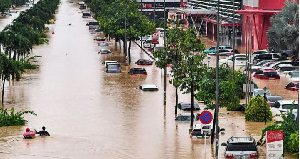
 Some areas in Accra have been submerged in water
The Secretary-General of the Ghana Federation of Labour (GFL), Abraham Koomson, has attributed Ghana’s persistent flooding challenges to corruption within Metropolitan, Municipal and District Assemblies (MMDAs), particularly in the areas of physical planning and development control.
According to him, the indiscriminate issuance of building permits and weak enforcement of planning regulations have allowed developers to construct buildings on waterways, wetlands, buffer zones and other environmentally sensitive areas, worsening the country's annual flooding crisis.
Speaking on Ahotor FM on June 6, 2026, Koomson alleged that some town planning officials have been compromised, resulting in the approval of developments in areas that should ordinarily be protected from construction activities.
He argued that corruption within local government structures remains one of the major obstacles to effective urban planning and environmental management.
The labour leader called for comprehensive reforms and stronger enforcement measures to address what he described as the root causes of flooding, especially in Accra and other rapidly growing urban centres.
Koomson warned that continued regulatory failures could lead to further encroachment on public infrastructure, including roads and highways, if authorities fail to act decisively.
He also questioned the level of coordination among institutions responsible for regulating physical development, citing examples from Tema where structures reportedly receive permits from one state agency only to be demolished later by another.
According to him, such situations raise concerns about inconsistencies in the development approval process and highlight the need for better collaboration among regulatory bodies.
He urged the central government to pay closer attention to the activities of local planning authorities and ensure that development regulations are strictly enforced.
Koomson maintained that tackling corruption within planning institutions, strengthening oversight mechanisms, and preventing unauthorised developments are critical steps toward reducing the devastating impact of floods and safeguarding communities across the country.
His comments come amid renewed public concern over flooding in several parts of the country following recent heavy rains, which have once again sparked calls for improved urban planning and environmental protection measures.

Copyright © 1994 - 2026 GhanaWeb. All rights reserved.










