



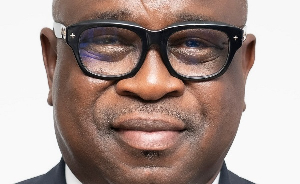
 Seidu Issifu, Minister of State in charge of Climate Change and Sustainability
At a high-level side event during the Bonn Climate Change Conference on June 9, 2026, Ghana’s Minister of State, Seidu Issifu, delivered a compelling call for urgent action on demand-side electrification, positioning it as both a climate necessity and a development imperative for Africa.
Addressing representatives of the International Renewable Energy Agency (IRENA), the COP31 Presidency, development partners, and climate stakeholders, the Minister emphasised that countries such as Ghana, despite contributing minimally to global greenhouse gas emissions, continue to suffer some of the most severe impacts of climate change.
He argued that for climate-vulnerable nations, electrification is no longer merely a technical energy transition strategy but a pathway to resilience, economic transformation, and survival.
The Minister noted that while the global community has established ambitious goals through the UAE Consensus and the Transition Away from Fossil Fuels (TAFF) roadmap, implementation remains uneven, particularly in regions where energy access challenges persist. Africa, he observed, faces the unique challenge of simultaneously expanding energy access and building the clean energy systems of the future.
Drawing attention to global energy trends, Issifu highlighted that electricity currently accounts for only 23 per cent of global final energy consumption. To remain aligned with the 1.5°C climate target, this figure must increase significantly over the coming decades.
For Africa, where electrification rates remain comparatively low, the transition presents both a challenge and an unprecedented opportunity to leapfrog traditional energy pathways.
Central to Ghana’s message was the need to shift focus beyond electricity generation alone. The Minister stressed that future energy planning must anticipate emerging demand patterns, particularly in rapidly urbanising and warming regions.
He identified cooling demand as one of the most significant drivers of future electricity consumption across West Africa. As temperatures rise and populations grow, cooling technologies will become essential for public health, productivity, and economic development.
Ghana, as a signatory to the Global Cooling Pledge, recognises that cooling should not be viewed solely as an additional burden on electricity systems. Instead, with the right infrastructure and policies, cooling technologies can become valuable flexibility assets that help stabilise power grids and improve energy efficiency. Strategic investments today, he argued, can prevent much higher costs associated with retrofitting systems in the future.
The Minister also underscored the critical importance of grid infrastructure. Global investment in electricity grids must nearly double over the next decade to support electrification goals.
For Ghana and many countries across West Africa, modern and resilient grids will determine whether industrial growth and clean energy adoption can be achieved at scale. He warned that underinvestment in grid infrastructure poses significant risks to economic growth, climate resilience, and energy security.
Highlighting Ghana’s broader climate ambitions, Issifu referenced the country’s estimated need for more than US$22 billion in climate resilience and adaptation financing by 2030. While acknowledging recent progress, including the mobilisation of US$21.8 million from the World Bank for carbon reduction and forest restoration initiatives, he emphasised that financing mechanisms must evolve.
Beyond increasing funding volumes, international partners should prioritise concessional financing and de-risking instruments that enable resources to reach local and sub-national institutions responsible for implementation.
A key theme throughout the Minister’s remarks was the importance of demand-side flexibility. As electrification accelerates globally, the ability to manage and shift electricity demand will become increasingly important.
Technologies and systems that allow energy consumption to be adjusted in response to grid needs can enhance reliability, reduce costs, and support the integration of renewable energy. Ghana intends to position flexible demand, including cooling systems, as a strategic resource within its energy transition framework.
Concluding his address, Issifu reaffirmed Ghana’s commitment to demonstrating how demand-side planning, institutional strengthening, and targeted investments can deliver meaningful climate and development outcomes across Africa.
He called on the COP31 Presidency, IRENA, the United Nations Environment Programme (UNEP), and international partners to place demand-side flexibility at the heart of global electrification strategies.
His message was clear: achieving a successful transition away from fossil fuels requires more than expanding clean energy generation.
It demands investment in flexible infrastructure, stronger local institutions, and energy systems designed for the realities of future demand. For Ghana and many other climate-vulnerable nations, the race toward electrification will be won not only by how electricity is produced, but also by how it is planned, managed, and used.

Copyright © 1994 - 2026 GhanaWeb. All rights reserved.










