



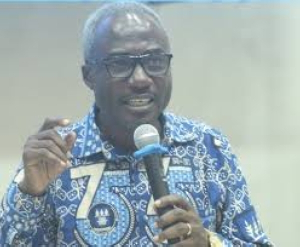
 A picture of Prof Isaac Owusu Mensah the head of the department of political science
A new study by the Department of Political Science at the University of Ghana has revealed a growing contradiction of popular narrative on military vs democratic rule in among Ghanaians.
While a majority still believe in democracy, frustrations over economic hardship and corruption are pushing some citizens to consider military rule as an alternative.
Why Ghanaians should not compare military rule to democracy – Awal Mohammed
The nationwide study, titled “Undertones and Public Perception of Military Rule and Democracy in Ghana”, surveyed 6,719 people across all 16 regions to assess public opinion on governance, democracy and the recent rise of military regimes in parts of the Sahel.
A report by graphic.com.gh on June 12, 2026, indicated that the findings suggest that although Ghanaians continue to value democratic governance, many are losing confidence in its ability to improve their standard of living.
According to the report, 52.3 per cent of respondents said they were satisfied with Ghana’s democracy, while 43.5 per cent rated the country’s democratic system as good and 10.3 per cent described it as very good.
Presenting the findings in Accra on Wednesday, June 10 2026, the Head of the Department of Political Science, Prof Isaac Owusu Mensah, said the majority of respondents clearly understood what democracy stood for.
He explained that 92.3 per cent of respondents correctly identified democracy as a system grounded in the rule of law, protection of human rights and regular elections, while 93.1 per cent of those surveyed were registered voters.
Despite this strong democratic awareness, Prof Mensah noted that worsening economic conditions and perceptions of corruption were weakening public confidence in civilian governance.
“The ostensible admiration for the Sahelian military regimes functions as a mirror reflecting democratic shortcomings rather than presenting a model to be emulated,” he said.
The research, conducted in collaboration with Konrad Adenauer Stiftung (KAS) Ghana, found that many respondents were more concerned about bread-and-butter issues than political ideology.
According to the study, 85.2 per cent of respondents identified democracy’s inability to deliver economic development, especially in relation to unemployment and the rising cost of living, as Ghana’s biggest democratic challenge.
Another 75.5 per cent said democracy had failed to effectively tackle corruption.
“These twin failures have fostered widespread popular disillusionment about democracy’s capacity to transform citizens’ lives,” Prof Mensah stated.
The report also revealed that some Ghanaians would be willing to support military intervention under certain conditions.
Prof. Mensah said 34.5 per cent of respondents indicated they would consider supporting military rule if democracy failed to improve economic conditions, while 28.1 per cent said unchecked corruption could make military rule attractive.
An additional 13.9 per cent linked such support to the government’s inability to create jobs for the youth.
“54.7 per cent of respondents believed the military would be more effective than civilian governments in combating corruption, while 49.5 per cent felt military leaders in the Sahel region were performing well,” Prof Mensah said.
However, he stressed that many respondents remained cautious about military takeovers due to fears of abuse of power and the erosion of civil liberties.
“However, focus group discussions conducted as part of the study showed that many participants remained wary of military rule because of concerns about human rights abuses, restrictions on freedoms and disregard for the rule of law,” he added.
Prof Mensah subsequently called on political leaders to focus on tackling corruption, improving accountability and implementing policies that would create jobs and improve living conditions.
He also urged greater civic education and stronger public engagement in governance beyond elections, stressing the need to rebuild trust in state institutions.
NA/VPO

Copyright © 1994 - 2026 GhanaWeb. All rights reserved.










