



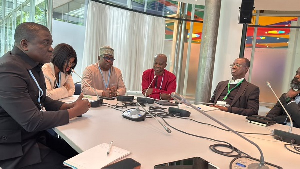
 Seidu Issifu is the Minister of State in charge of Climate Change and Sustainability
Minister of State for Climate Change and Sustainability, Seidu Issifu, has pledged to strengthen collaboration between Ghana's climate negotiators, government institutions, and key stakeholders to ensure that international climate agreements translate into tangible benefits for the country.
According to him, Ghana must improve coordination and decision-making processes if it is to maximise opportunities arising from global climate negotiations and maintain its growing influence within Africa's climate diplomacy architecture.
Speaking at the 64th Session of the United Nations Framework Convention on Climate Change (UNFCCC SB64) in Bonn, Germany, on Friday, June 12, 2026, Issifu acknowledged concerns raised by negotiators over the gap between international climate discussions and implementation at the national level.
He noted that while Ghana's negotiators often return from global climate meetings with valuable technical knowledge and negotiated outcomes, there is a need for stronger institutional mechanisms to ensure that these outcomes are effectively incorporated into national policies and programmes.
"We must build stronger links between our negotiators and national institutions so that the outcomes of international climate discussions do not remain on paper but result in real benefits for communities, businesses, and the country as a whole," he stated.
He further disclosed plans to develop a clear roadmap for collaboration among ministries, climate negotiators, and other stakeholders.
According to him, the framework will outline priority actions, responsibilities, and timelines, while creating mechanisms for sustained engagement and improved coordination across government institutions.
He also assured participants that his office remains committed to facilitating engagement with sector ministries and the Presidency to address bottlenecks that slow climate-related decision-making.
Issifu reaffirmed Ghana’s commitment to advancing climate and development goals through demand-side planning, stronger institutions, and targeted investments.
He also urged the COP31 Presidency, IRENA, UNEP, and other international partners to make demand-side flexibility a central pillar of global electrification strategies.
The discussions highlighted concerns about delays in responding to climate opportunities and the need for more efficient communication among state institutions, particularly as Ghana assumes a more prominent role in international climate negotiations through its leadership of the African Group of Negotiators (AGN).
Participants also proposed the creation of a climate-focused attaché position within Ghana's diplomatic mission in Germany to support the country's expanding role in global climate processes.
The meeting brought together members of Ghana's climate negotiating team, officials from the country's diplomatic mission in Germany, and climate policy experts.
ANAS/MA

Copyright © 1994 - 2026 GhanaWeb. All rights reserved.










