



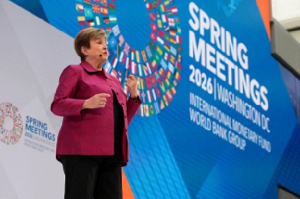
 Kristalina Georgieva is the Managing Director of the International Monetary Fund (IMF)
The Managing Director of the International Monetary Fund (IMF), Kristalina Georgieva, has warned that while the global economy has remained resilient amid the ongoing war in the Middle East, African countries are among those bearing the brunt of the conflict's economic fallout.
According to her, rising energy prices triggered by the conflict are placing severe pressure on countries that depend heavily on fuel imports and have limited fiscal space to absorb the shocks.
She noted that although major economies such as the United States and China have maintained strong economic growth, the situation is significantly different for many developing economies, particularly in Africa.
Petrol prices could drop by over 9% from June 16 - COMAC
"The global economy appears to be holding up, but this overall resilience masks significant disparities," she stated.
She explained that oil prices have risen by about 30 percent since the outbreak of the conflict, increasing inflationary pressures and straining government budgets across many countries.
According to her, African nations that rely heavily on imported fuel are facing mounting challenges as rising energy costs worsen external balances, increase public spending pressures and elevate financing needs.
"The strain is especially visible in Africa," Georgieva observed. She noted that several countries on the continent, including Ethiopia, Malawi and Zambia, have already experienced fuel shortages, while others have witnessed sharp increases in fuel prices.
Beyond fuel costs, the IMF boss warned that higher energy prices are also driving up fertiliser and food prices, raising concerns about food security in many low-income countries.
She explained that prolonged disruptions could make it difficult for farmers to access affordable inputs, potentially leading to reduced agricultural output and further inflationary pressures.
Despite the challenges, Georgieva said financial markets have remained relatively stable, while investment in technology, particularly artificial intelligence and data centres, continues to support growth in some advanced economies.
Georgieva further stressed the need for policymakers to remain agile in responding to economic uncertainties while preserving price stability and protecting vulnerable populations.
She assured that the IMF remains committed to supporting member countries affected by the crisis through policy advice, capacity-building programmes and financial assistance where necessary.
ANAS/EB
ITAS will deliver more efficient tax administration - Anthony Sarpong

Copyright © 1994 - 2026 GhanaWeb. All rights reserved.










