



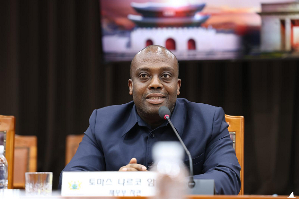
 Thomas Nyarko Ampem is the Deputy Finance Minister
Deputy Finance Minister, Thomas Nyarko Ampem, has disclosed that Ghana's tax-to-GDP ratio improved from about 12.3 per cent to 14 per cent in 2025, describing the development as a positive indication of the country's efforts to strengthen domestic revenue mobilisation and enhance fiscal sustainability.
Speaking during the opening session of the Korea High-Level Invitational Visit by the Ghanaian delegation under the Ghana Tax Modernisation Project (2023–2026) in the Republic of Korea, he said the government remains committed to maintaining macroeconomic stability following the successful completion of Ghana's IMF-supported economic programme, while implementing policies aimed at boosting domestic revenue generation and promoting inclusive growth.
However, he acknowledged that Ghana's tax performance still falls short of the levels achieved by countries with similar economic profiles.
“Ghana’s tax-to-GDP ratio, although improving from approximately 12.3 percent to about 14 percent in 2025, remains below the average for countries at similar levels of development,” he said.
He noted that the situation highlights the need for further reforms to improve revenue collection efficiency, reduce leakages, broaden the tax net, and encourage voluntary tax compliance.
Ampem identified the adoption of modern revenue administration systems, stronger institutional capacity, enhanced collaboration among state agencies, and increased use of technology as key measures required to sustain the progress achieved so far.
According to him, these considerations underscore the importance of the Ghana Tax Modernisation Project to the country's revenue mobilisation agenda.
The project, which is being implemented with support from the Korea International Cooperation Agency (KOICA), the Korea Institute of Public Finance, and other development partners, seeks to transform Ghana's tax administration system through innovation, technology, institutional reforms, and capacity building.
He explained that the project's objective goes beyond improving tax collection and is aimed at building a modern, technology-driven tax administration framework that promotes efficiency, strengthens transparency, enhances public trust, and supports Ghana's long-term development aspirations.
Ampem expressed optimism that lessons from Korea's development journey, together with recommendations from the project, would help Ghana build a more resilient and effective tax system capable of financing the country's development priorities.
ANAS/MA
ITAS will deliver more efficient tax administration - Anthony Sarpong

Copyright © 1994 - 2026 GhanaWeb. All rights reserved.










