



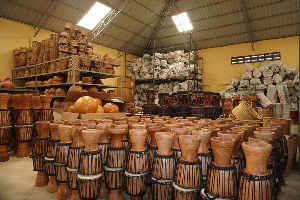
 Kramer said the remarkable growth reflected increasing global demand
Ghana’s handicrafts sector has recorded about 500 percent growth in exports, making it the fastest-growing segment within the country’s non-traditional export sector, the Ghana Export Promotion Authority (GEPA) has announced.
Rashid Raymond Kramer, Deputy Chief Executive Officer of GEPA in charge of Marketing and Promotions, disclosed this during the Eye on Port media forum powered by the Ghana Ports and Harbours Authority (GPHA).
Kramer said the remarkable growth reflected increasing global demand for Ghanaian cultural products and handmade artefacts.
He noted that products such as ornaments, Adinkra-inspired items, paintings, woodcrafts, and other handicrafts were attracting growing interest in international markets.
He added that changing global consumer preferences had increased demand for handmade and culturally distinctive products.
According to him, Ghanaian handicrafts were gaining popularity due to their unique designs, craftsmanship, and cultural significance.
He said the sector had enormous growth potential and could become a major contributor to Ghana’s export earnings if given the needed support.
He identified textiles, garments, and fashion products as another area with significant export opportunities, citing growing international demand for products such as kente and other Ghanaian fabrics.
Kramer noted that Ghanaian creative and cultural products continued to gain global recognition and urged stakeholders to invest in branding, quality improvement, and market development to sustain the momentum.
He added that the growing acceptance of Ghanaian products in international markets demonstrated their competitiveness and ability to generate foreign exchange.
He said GEPA had identified value addition as a central pillar for achieving sustainable growth in the export sector and supporting job creation under the 24-hour economy initiative.
Kramer stated that Ghana could significantly increase export earnings by processing agricultural products instead of exporting them in raw form, citing yam, coconut, cocoa, mango, and pepper as key opportunities.
He added that Ghana’s agricultural products already enjoyed strong demand internationally, making processing and industrialisation the next step in maximising export revenue.
He noted that many farmers and exporters were already embracing processing activities, including cocoa butter, cocoa cake, shea butter, dried fruits, and other semi-processed products.
He explained that value addition improved earnings, reduced post-harvest losses, and extended product shelf life.
Kramer said Ghana had strong competitive advantages, including abundant agricultural resources and access to major international markets.
He urged investors to take advantage of opportunities in the export sector to establish processing facilities and support Ghana’s industrial transformation agenda.

Copyright © 1994 - 2026 GhanaWeb. All rights reserved.










