



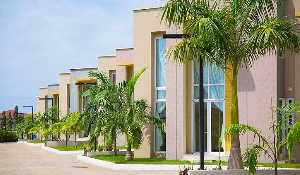
 Real estate in Ghana is anchored in real and growing demand
GhanaWeb Feature by Mawuli Ahorlumegah
In an economy shaped by inflationary pressures, shifting interest rates, and rising construction costs, real estate continues to stand out as one of the most resilient and attractive investment classes in Ghana. For both institutional investors and individuals, property remains a long-term hedge against uncertainty and a critical driver of wealth creation.
At the heart of Ghana’s real estate demand is a structural challenge: a significant housing deficit estimated at between 1.8 million and 2 million units, according to industry and policy estimates. The gap continues to widen as urbanisation accelerates, with thousands migrating annually into major cities such as Accra, Kumasi, and Takoradi in search of jobs and improved living standards.
A market driven by demand, not speculation
Unlike many asset classes that fluctuate with short-term sentiment, real estate in Ghana is anchored in real and growing demand. Rapid population growth, now estimated at over 32 million people, combined with urban expansion, has created sustained pressure on housing supply.
In Accra alone, demand far outpaces available formal housing stock, pushing many residents into informal settlements or high-cost rental arrangements. The result is a rental market where yields remain relatively strong, particularly in middle-income and emerging commercial corridors.
For investors, this imbalance between supply and demand is one of the strongest signals of long-term value appreciation.
There is also growing interest in modular construction, prefabricated housing, and alternative building materials as cost-reduction strategies to accelerate delivery and help close Ghana’s housing deficit.
Why real estate holds its value
One of the key reasons real estate remains attractive is its ability to preserve value against currency depreciation and inflation. While the cedi has experienced fluctuations in recent years, property values in prime and developing locations have generally trended upward over time.
Unlike cash savings, which lose purchasing power, or some financial assets that are vulnerable to market volatility, land and housing typically appreciate as infrastructure expands around them.
Areas such as East Legon, Airport Hills, Tema Community 25, and emerging peri-urban zones continue to see rising property prices driven by road networks, commercial expansion, and private sector development.
Structural challenges fuel opportunity
Ghana’s housing deficit is not just a challenge - it is also what sustains long-term investment potential.
Key drivers of the gap include:
• High cost of construction materials
• Limited access to long-term, affordable mortgage financing
• Rapid urban population growth
• Slow pace of large-scale affordable housing delivery
According to several housing industry experts, addressing the deficit requires sustained public-private collaboration to unlock affordable housing at scale and improve access to financing.
Emerging solutions and policy direction
Recent policy discussions have increasingly focused on expanding housing supply through blended financing models and infrastructure-driven development. Public-private partnerships (PPPs) remain central to efforts aimed at bridging Ghana’s housing gap.
Initiatives such as large-scale housing schemes under national development agendas, alongside private sector real estate platforms and investment vehicles, are expected to play a key role in reshaping access to property.
Against this backdrop, GhanaWeb is set to usher in a new phase in the property market with the launch of its GhanaWeb Real Estate Platform, a digital marketplace designed to transform how Ghanaians buy, sell, rent, and invest in property.
Scheduled for Thursday, July 9, 2026, at the Alisa Hotel, North Ridge, the launch will bring together stakeholders from the real estate, technology, and financial sectors for the unveiling of a platform aimed at modernising property transactions in Ghana.
Under the theme “The Future of Real Estate Begins Here – Connecting Buyers, Sellers, Renters and Investors Through Technology,” the platform is designed to address long-standing challenges in the sector, including limited access to verified listings, transparency gaps, and inefficient connections between market players.
The GhanaWeb Real Estate Platform will create a trusted digital ecosystem where buyers, sellers, renters, developers, agents, and investors can interact more seamlessly. Users will be able to discover verified properties, showcase developments, and connect with credible industry professionals within a single marketplace.
GhanaWeb set to introduce innovative real estate platform on July 9
Digital platforms are increasingly seen as central to this transformation, improving transparency, reducing inefficiencies, and making property transactions more accessible, data-driven, and inclusive.
The investment case remains strong
Despite macroeconomic pressures, real estate continues to offer three key advantages: stability, long-term appreciation, and income generation.
Rental demand in urban centres remains strong, while land banking - particularly in fast-growing outskirts of Accra - continues to yield significant returns over time.
For many investors, real estate is no longer just about owning property; it is about securing a hedge against economic uncertainty while participating in one of Ghana’s most structurally supported growth sectors.
As urbanisation continues and the housing deficit persists, real estate is expected to remain not only relevant but essential to Ghana’s economic transformation story.


Copyright © 1994 - 2026 GhanaWeb. All rights reserved.










