



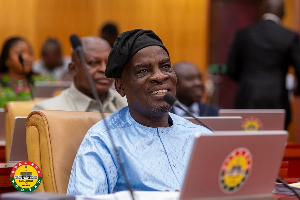
 Haruna Iddrisu is the Minister for Education
The Minister of Education, Haruna Iddrisu, has announced measures by the government and the Ministry of Education aimed at improving the welfare, motivation and retention of teachers.
According to him, the new measures are particularly for those in rural and deprived communities.
Speaking on the floor of Parliament on July 2, 2026, he said, “The Ministry of Education, in collaboration with the Ghana Education Service, is implementing a number of targeted strategies to improve the welfare, motivation and retention of teachers across the country, particularly those posted to rural and underserved areas."
British Council celebrates outstanding IGCSE and A-Level performers in Ghana
The minister further said the welfare of teachers has been made a national priority to promote motivation, protect the dignity of teachers and improve long-term educational outcomes.
“Teacher welfare is positioned as a national priority to strengthen their motivation, dignity and retention, and for long-term education outcome gains. As part of government efforts to attract, motivate and retain teachers in deprived and underserved communities, special incentives have been put in place for teachers who are self-posting to such areas,” he stated.
Haruna Iddrisu mentioned that one of the measures is the reduction of the qualifying period needed to apply for study leave with pay for those who voluntarily accept postings to such communities.
Benkum SHS emerges overall best at National AI, Robotics and Coding Competition
“I am happy to note that one of these incentives is a reduction in the number of years required to qualify for study leave. Originally, it was three years if you were in a deprived area. We have reduced it now to two years. So any person who is self-posting to a rural deprived area after two years of service can apply for study leave with pay,” he said.
The minister also said that the government is planning to implement a 20% rural posting allowance for teachers serving in deprived communities, adding that the Ministry of Finance and the Ministry of Education are finalising arrangements for its rollout.
“We are also engaged in continuous education and capacity building of teachers across the country. In addition, the government is committed to rolling out a 20 per cent salary-related rural posting allowance for teachers serving in rural and deprived areas. The Ministry of Finance and the Ministry of Education are working on implementing that. A significant thing that affects the welfare of teachers is their shelter housing.”
He mentioned that the government is advancing the Teacher Dabre Initiative proposed in President John Dramani Mahama’s manifesto.
The proposed initiative is aimed at providing accommodation for teachers in rural communities, and all new school infrastructure projects will be required to include teachers' quarters to help address housing challenges that hinder deployment and retention.
“A significant thing that affects the welfare of teachers is their shelter housing. We are currently engaging in some discussion to deploy the Teacher Dabre Initiative of President Mahama, which was in the NDC manifesto, which will provide accommodation for teachers in rural areas to address the housing challenges that affect teacher deployment and retention in those areas,” he stated.
“Under this initiative, deliberate measures are being taken to ensure that the construction of new school facilities is accompanied by teacher accommodation. So this time we have directed that if contracts are awarded for school blocks, they must naturally include accommodation facilities for teachers,” he added.
RAD/BAI

Copyright © 1994 - 2026 GhanaWeb. All rights reserved.










