



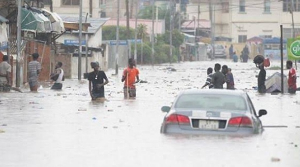
 A file photo of flood after heavy rains in Accra
More than 53 years on, devastating floods have persistently plagued communities in the Greater Accra Region, many of which remain vulnerable each year the country experiences heavy rainfall.
This development has raised fresh concerns about the city's ability to deal with heavy rainfall despite decades of promises and interventions.
On June 23, 1973, torrential rains caused the River Odaw to overflow its banks, flooding communities including Circle, Alajo, Kaneshie, Nima and areas along the Odaw Basin.
‘I don’t know how her house spirits operate’ - Watch as tour guide refuses to put snake around lady’s neck
Homes collapsed, roads became impassable, communication networks were disrupted and hundreds of families were displaced.
Historical records in a video shared on X by Ghana facts and history on Friday July 3, 2026, show that at least three people lost their lives while many others were stranded as floodwaters submerged large parts of the capital.
Following the disaster, the then Head of State, Colonel Ignatius Kutu Acheampong, called for improved drainage infrastructure and better flood-control measures to prevent similar disasters in the future.
His administration identified drainage improvement as a key response to the recurring floods that had affected Accra since the 1950s.
On Monday June 29, 2026, heavy rains once again submerged homes and roads in Alajo, Kaneshie, Odawna, Adabraka, Circle, Mallam and other parts of Accra, forcing residents to evacuate and disrupting businesses and transport networks.
Experts say although drainage infrastructure has improved over the years, rapid urbanisation, weak enforcement of planning regulations, building on waterways and wetlands, and indiscriminate dumping of refuse into drains have reduced the city's ability to manage stormwater.
The Ghana Meteorological Agency (GMet) has also warned that even relatively moderate rainfall can now trigger flooding because of the declining capacity of Accra's drainage system.
Government and development partners have undertaken several flood mitigation projects over the years, including the Greater Accra Resilient and Integrated Development (GARID) Project, which includes improvements to drainage infrastructure within the Odaw River Basin.
However, experts argue that engineering works alone will not solve the problem unless waterways are protected and residents adopt better sanitation practices.
The recurring floods have become one of Accra's most persistent urban challenges.
Historical records show that major flooding has struck the capital repeatedly over the past five decades, particularly in communities along the Odaw River and Korle Lagoon.
The similarities between the destruction witnessed in 1973 and the recent floods underscore how longstanding drainage, planning and environmental challenges continue to threaten lives and property whenever there’s a heavy downpour.
ANAS/VPO
Accra, Ghana, 23 June 1973 — Heavy rains brought chaos and severe damage to Accra. The River Odaw overflowed, homes collapsed in Alaajo, roads and communications were cut, and many families were made homeless. Head of State Col. Ignatius Acheampong called for improved drainage. pic.twitter.com/CVBBr5EBZx
— GHANA FACTS & HISTORY (@GhanaianMuseum) July 3, 2026

Copyright © 1994 - 2026 GhanaWeb. All rights reserved.










