



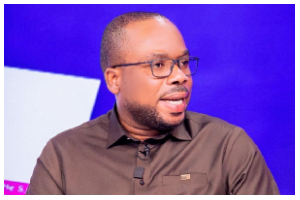
 Benjamin Anani Quashie is Ghana's High Commissioner to South Africa
Ghana's High Commissioner to South Africa, Benjamin Anani Quashie, has clarified the conflicting accounts surrounding the killing of a Ghanaian in South Africa, stating that local police initially misidentified the victim.
Speaking on The Key Points on TV3 on July 4, 2026, Quashie explained that the deceased's correct name is Bashiru Isak, contrary to an earlier statement by the South African Police Service (SAPS), which identified the victim as Kwabena Boakye, aged 35.
According to him, the discrepancy arose after police provided the Ghana High Commission with incorrect details following the murder.
"When you look at the report from the police, there's a case number they gave, and the name of the deceased was stated as Kwabena Boakye. That's not true. The name of the deceased is Bashiru Isak," he said.
Quarshie disclosed that the High Commission challenged the police over the inconsistency and requested that the victim's identity be verified.
"We had a contention with them and insisted on a positive identification of our late compatriot. After we did that, they confirmed to us that they had gotten the name wrong and that the correct name is Bashiru Isak," he explained.
He, however, noted that although the police acknowledged the error, the official case file had yet to be amended to reflect the victim's correct identity.
"Even in the case file, they have still not corrected the name to the one we provided. We are hoping they will do so in the coming days," he added.
Quarshie also addressed questions over the location of the incident, explaining that while the South African Police Service stated the murder occurred in Nyanga, the Ghana High Commission reported it as having taken place in Khayelitsha.
He said there was no contradiction, explaining that Nyanga is located within the broader Khayelitsha area of Cape Town.
"The murder happened in a town within Khayelitsha in the Cape Town metropolitan area. The Nyanga the police referred to is within the same vicinity where the incident occurred," he said.
Witness in murder of Ghanaian in SA has gone into hiding over safety fears - Quashie
The High Commissioner revealed that gathering information about the incident proved challenging because many Ghanaians living in Cape Town were too frightened to cooperate.
He explained that after receiving news of the killing, the High Commission dispatched officials from Pretoria to Cape Town to establish the facts.
"If you know Cape Town very well, many Ghanaians there are always on edge because murders and other violent crimes occur frequently. We found it difficult to get information because many of our nationals were afraid to come forward," he said.
Quashie said the High Commission therefore relied heavily on the police while independently verifying the victim's identity.
The High Commissioner also expressed concern over renewed anti-immigration demonstrations in Pretoria, saying many Ghanaian-owned businesses remained closed as a precaution.
According to him, demonstrators have indicated they intend to continue holding protests every Thursday, raising fears among migrant communities.
While acknowledging that South African President Cyril Ramaphosa has publicly condemned vigilantism and warned against civilians demanding immigration documents from foreigners, Quarshie said some protesters continue to ignore those directives.
He urged the South African government to maintain a strong security presence during the demonstrations to safeguard the lives and property of both citizens and foreign nationals.
Bashiru Isak, a 40-year-old Ghanaian tailor, was shot dead in Cape Town, South Africa, during anti-immigrant protests on June 30, 2026.
He reportedly lived and worked in South Africa for about two decades and was killed inside his shop in Khayelitsha, Cape Town, amid anti-immigrant demonstrations targeting foreign nationals.
Ghana has condemned the killing and is demanding a full investigation and swift prosecution of those responsible.
JKB/VPO
Watch bird's-eye view of how illegal construction on waterways is fueling Accra's flood crisis

Copyright © 1994 - 2026 GhanaWeb. All rights reserved.










