



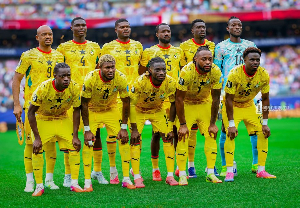
 The Black Stars exited the 2026 World Cup in the Round of 32
Every World Cup campaign tells a story. Some are remembered for glorious triumphs, others for painful collapses.
Ghana’s journey at the 2026 FIFA World Cup fell somewhere in between.
The Black Stars arrived with modest expectations. Drawn alongside England, Croatia and Panama, few gave them a realistic chance of progressing.
World Cup 2026: Ghana's Benjamin Asare ranked 6th best goalkeeper
Yet, by the end of the group stage, they had earned a place in the Round of 32, restoring belief that Ghana could once again compete with the world’s best.
But just as hope began to grow, the campaign ended with a frustrating whimper against Colombia.
There were reasons to celebrate. There were mistakes that proved costly. And there were moments that left supporters scratching their heads.
The Good
Back in the Knockout Stage
The first positive was simple: Ghana were back in the knockout rounds.
After the heartbreak of their group-stage exit in Qatar four years earlier, the Black Stars showed resilience and character to navigate a difficult group.
They fought for every point, earning the results needed to finish among the best third-placed teams and extend their stay in North America.
It wasn’t glamorous football, but it was effective. More importantly, it reminded the football world that Ghana remain capable of competing on the biggest stage.
A Defensive Unit Built on Discipline
The backbone of Ghana’s success was a defence that refused to give in easily.
The Black Stars conceded only three goals in four matches despite facing the attacking quality of England, Croatia and Colombia.
Even against England, one of the tournament favourites, Ghana stood firm for 90 minutes to earn a hard-fought goalless draw that showcased organisation, discipline and belief.
While the attack often struggled to click, the defensive unit consistently gave the team a chance to stay in matches.
A Goalkeeping Battle Ghana Has Been Waiting For
For years, Ghana have searched for certainty in goal. At this World Cup, they may have found something even better, a genuine battle for the number one jersey.
Benjamin Asare seized his opportunity with confidence when he replaced Lawrence Ati-Zigi in Ghana’s first game against Panama, producing crucial saves that kept Ghana alive in key moments.
Ati Zigi, already an established member of the squad, also demonstrated why he has been trusted for years after he regained his spot against Colombia.
Instead of worrying about who should start, Ghana now have two reliable goalkeepers pushing each other for the jersey.
Healthy competition is exactly what the Black Stars have lacked in recent years, and this tournament may have solved that problem.
Resilience Despite Missing Key Players
Injuries threatened to derail Ghana’s campaign before it had fully gathered momentum.
The Black Stars had to cope without consistently having Mohammed Kudus, Mohammed Salisu and Alexander Djiku available.
Losing players of that quality would weaken almost any national team.
Instead of making excuses, Ghana adapted, dug deep and still found a way into the knockout rounds.
The Bad
Goals Were Simply Too Hard to Find
The biggest weakness throughout the tournament was impossible to ignore.
Ghana scored just two goals in four matches. Every chance had to be worked for, attacking combinations frequently broke down and opposing goalkeepers were rarely forced into difficult saves.
The Black Stars became increasingly dependent on defending perfectly because there was little confidence they could consistently outscore opponents.
A Team That Defended More Than It Attacked
Ghana’s tactical discipline deserved praise, but their attacking ambition often felt limited.
Too often they surrendered possession, dropped into a compact shape and waited for counterattacking opportunities that rarely materialised.
That approach kept them competitive against stronger opponents, but it also prevented them from imposing themselves on games when they desperately needed a goal.
Another Fresh Start on the Horizon
The tournament could mark the end of Carlos Queiroz’s short tenure.
His departure, not yet confirmed by the Ghana Football Association, immediately after the World Cup means Ghana could again begin the search for a new head coach.
Continuity has often been a challenge for the Black Stars, and another managerial change raises fresh questions about the team’s long-term direction.
The Ugly
Jordan Ayew’s Remarkable Statistic
Perhaps the most astonishing statistic of Ghana’s campaign belonged to the captain himself.
Jordan Ayew completed the entire tournament without attempting a single shot.
For a striker entrusted with leading the attack and wearing the captain’s armband, it is a statistic that encapsulates the Black Stars’ struggles in the final third.
Whether through lack of service, tactical instructions or poor attacking cohesion, Ghana’s main striker simply never found himself in a position to threaten goal.
Brandon Thomas-Asante’s Curious Lack of Minutes
Few selection decisions generated more debate than the handling of Brandon Thomas-Asante.
After producing a lively and influential cameo against Panama that helped Ghana secure a crucial victory, many expected his role to grow as the tournament progressed.
Instead, he featured for just 19 minutes across the remaining matches.
As Ghana struggled desperately for goals against Croatia and Colombia, one of their brightest attacking sparks remained on the bench.
It remains one of the biggest tactical questions left unanswered from the campaign.
A Tournament Where the Attack Let the Team Down
In many ways, this was the defining image of Ghana’s World Cup.
The defence did its job. The goalkeepers inspired confidence. The team competed with courage against stronger opponents and showed admirable resilience throughout the tournament.
But football is decided at both ends of the pitch.
While the defenders gave Ghana every opportunity to progress further, the attack never found the cutting edge required to seize those opportunities. It was a campaign built on determination, undone by a lack of firepower.
That is both the biggest lesson and the greatest challenge awaiting the Black Stars.
FKA/VPO
Meanwhile, watch as fans react to Ghana’s defeat to Croatia:

Copyright © 1994 - 2026 GhanaWeb. All rights reserved.










