



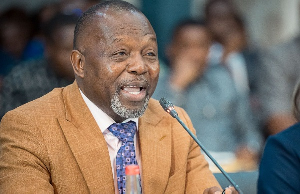
 Dominic Ayine is Ghana's Attorney General and Minister of Justice
The Attorney General and Minister of Justice, Dr Dominic Ayine, has laid the Tribunal Bill, 2026, before Parliament, seeking to activate constitutional provisions that have remained largely dormant since the 1992 Constitution came into force.
According to a report by adomonline.com on July 6, 2026, the proposed law, which has already gone through its first reading, would establish a new tribunal system operating alongside the conventional courts but under the supervision of the judiciary.
Government says the move is intended to ease pressure on the courts, reduce delays in the adjudication of cases and allow broader citizen participation in the administration of justice.
Under the Bill, a two-tier structure made up of Regional Tribunals and District Tribunals would be created.
Regional Tribunals would have the authority to hear certain criminal cases that are currently handled by the High Court, including matters involving economic crimes, narcotics offences, tax offences, customs violations and cases involving the loss of state funds or property.
District Tribunals would share jurisdiction with Circuit Courts over selected criminal offences.
However, the proposed law specifically excludes treason, capital offences and other cases that must be tried on indictment.
It also bars tribunals from dealing with constitutional interpretation cases under Article 130, human rights violations and any other matters excluded by law.
The Bill seeks to address concerns that have historically surrounded public tribunals by introducing safeguards such as appellate review, oversight mechanisms, and clear rules on the appointment, discipline, retirement and removal of tribunal members.
It further sets out guiding principles including fairness, transparency, efficiency, independence and respect for fundamental human rights.
According to Dr Ayine, the reforms are intended to create a modern tribunal system that is firmly grounded in constitutional protections, due process and judicial accountability.
Following its first reading, the Bill has been referred to Parliament’s Constitutional and Legal Affairs and Judiciary Committees for detailed scrutiny.
The referral follows discussions held last week between the Attorney General and the joint committee ahead of the formal presentation of the legislation to the House.
NA/VPO

Copyright © 1994 - 2026 GhanaWeb. All rights reserved.










