



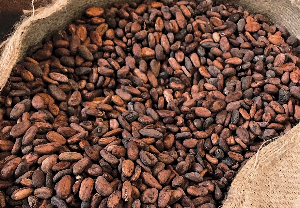
 File photo of cocoa beans
Cocoa prices are climbing sharply, with New York futures hitting a 5.75‑month high and London cocoa reaching a six‑month peak, as adverse weather in West Africa raises fears of tighter supplies next season.
Prices have rallied over the past three weeks after heavy rains in Ivory Coast and Ghana flooded roads, cutting farmers off from their farms and export ports, according to barchart.com.
The excess moisture has also increased the risk of brown rot and black pod disease, both of which threaten yields and harvest quality.
Longer‑term risks are mounting as well. On June 10, Japan’s Meteorological Agency confirmed the onset of an El Niño pattern, which typically brings hotter, drier weather to West Africa.
The U.S. National Oceanic and Atmospheric Administration estimates a 67% chance of a “Super El Niño”, among the strongest on record, which could further stress cocoa trees and reduce output.
Production Outlook Weakens
Early surveys of the 2026/27 Ivory Coast crop show weaker‑than‑usual cherelle formation, an early signal of a softer main harvest beginning in September.
Current estimates put the season at 1.8 million metric tons, down 18% from last year’s 2.2 million.
Meanwhile, Nigeria’s cocoa association projects an 11% drop in production to 305,000 metric tons for 2025/26, adding to supply concerns. Together with Ghana and Ivory Coast, Nigeria plays a critical role in global cocoa output.
Farmer pay has also been slashed. Ghana cut its official farmgate price by nearly 30% this season, while Ivory Coast reduced its mid‑crop pay by 57% in March. The two countries account for more than half of the world’s cocoa supply.
Mixed Signals from Inventories and Exports
Despite supply concerns, inventories are rising. ICE cocoa stockpiles climbed to a near two‑year high of just over 3 million bags last Thursday.
Ivory Coast also raised its port‑arrival estimate by more than 260,000 metric tons on June 11, with cumulative shipments for the October–June marketing year up 20% year‑over‑year at 2.04 million metric tons.
Nigeria added to the picture, with May cocoa exports jumping 28% year‑over‑year to 18,034 metric tons, according to Bloomberg.
Still, Ivory Coast expects overall 2025/26 production to fall nearly 11% to 1.65 million tons, reinforcing concerns about future supply.
Demand Trends and Global Balance
On the demand side, grindings remain weak. North American grindings fell almost 4% in the first quarter, while European grindings dropped nearly 8%, the weakest Q1 figure in 17 years.
Asia bucked the trend, with grindings rising just over 5% instead of the expected decline.
Global balance sheets are tightening. StoneX has cut its 2026/27 global surplus forecast to 149,000 metric tons, down sharply from its earlier estimate of 267,000 tons, citing El Niño risks.
Its 2025/26 surplus forecast was also trimmed to 247,000 tons.
DR/SA
Inside the AI revolution that could save lives on Ghana's roads

Copyright © 1994 - 2026 GhanaWeb. All rights reserved.










