



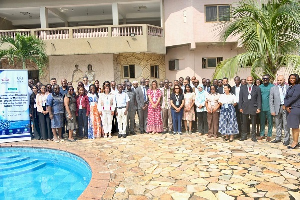
 The meeting aims to help participating countries adopt standard scientific methods
Scientists from 21 African countries have gathered in Accra to develop common protocols for monitoring microplastics in coastal environments using nuclear and isotopic techniques.
The five-day regional meeting, hosted by the Ghana Atomic Energy Commission (GAEC) under the International Atomic Energy Agency (IAEA) Regional Technical Cooperation Project RAF7022, began on Monday, July 6, 2026, and ends on Friday, July 10, 2026.
The meeting aims to help participating countries adopt standard scientific methods for monitoring microplastics measuring between 20 and 300 micrometres, improve data comparability and strengthen efforts to address marine plastic pollution.
The participating countries include Ghana, Benin, Burkina Faso, Burundi, Comoros, Djibouti, Egypt, Ethiopia, Kenya, Mauritania, Mauritius, Morocco, Namibia, Nigeria, Senegal, Seychelles, South Africa, Sudan, Tanzania, Togo and Tunisia.
The initiative comes amid growing concerns over the impact of plastic pollution on marine ecosystems, fisheries, tourism, food security and public health. The United Nations Environment Programme (UNEP) estimates that about 11 million tonnes of plastic waste enter aquatic ecosystems globally each year.
Addressing the opening session, the Director-General of GAEC, Prof. Samuel Boakye Dampare, said Ghana was committed to supporting continental efforts to tackle environmental challenges through science and innovation.
He said GAEC, through its partnership with the IAEA under the NUTEC Plastics Initiative and other programmes, had strengthened its capacity for plastics research through improved laboratory infrastructure, advanced equipment and specialised training.
“Through our strong partnership with the IAEA under the NUTEC Plastics Initiative and other AFRA programmes, Ghana has significantly strengthened its capacity for plastics research through enhanced laboratory infrastructure, modern analytical equipment and specialised training,” he said.
Prof. Dampare noted that GAEC scientists were currently involved in research projects focused on microplastics in marine and agricultural ecosystems, as well as the development of sustainable plastic alternatives and recycling technologies.
He added that the Commission would continue to support regional collaboration and the use of scientific approaches to address plastic pollution.
The IAEA Technical Officer for the project, Carlos Alonso Hernández, said adopting harmonised monitoring methods would enable African countries to generate reliable data for environmental policy decisions.
He explained that while countries monitored marine environments under different conditions, common scientific protocols would provide a better understanding of plastic pollution trends across the continent.
He added that nuclear and isotopic techniques provided scientists with improved tools to track the sources, movement and accumulation of microplastics in marine environments.
The Director of the National Nuclear Research Institute (NNRI) of GAEC, Prof. Samuel Ganyaglo, said nuclear and isotopic techniques would help researchers better understand the sources and effects of microplastics in Africa’s aquatic ecosystems.
He described the meeting as an important step towards harmonising monitoring approaches and strengthening Africa’s response to marine plastic pollution.
The meeting brought together researchers, IAEA experts and environmental scientists from across Africa to share knowledge and build stronger partnerships in addressing plastic pollution.

Copyright © 1994 - 2026 GhanaWeb. All rights reserved.










