



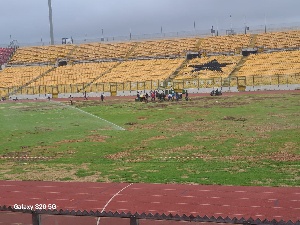
 Baba Yara Sports Stadium
The recent viral videos showing groundskeepers rehabilitating the pitch at the Baba Yara Sports Stadium have sparked widespread debate among Ghanaians, with many expressing disappointment over the state of one of the country’s premier sporting venues.
While much of the criticism has been directed at the workers restoring the pitch, the real issue extends far beyond those on the ground.
The challenge lies in Ghana’s long-standing neglect of sports infrastructure and the lack of sustained investment in maintaining the nation’s sporting facilities.
England football legend splits from Ghanaian wife Chantelle Tagoe
National Sports Authority (NSA) Director-General Yaw Ampofo Ankrah has shifted the focus of the conversation to what he believes is the root cause of the problem.
According to him, the discussion should not centre on the efforts of groundskeepers, who continue to work under limited conditions, but rather on why Ghana’s major stadiums continue to experience deteriorating playing surfaces despite years of revenue generated from football.
Since qualifying for its first FIFA World Cup in 2006, Ghana has benefited from millions of dollars in FIFA prize money, sponsorship deals, broadcasting rights, and other football-related investments.
However, almost two decades later, several of the country’s major stadiums continue to struggle with poor pitches, ageing equipment, and inadequate maintenance.
Sports infrastructure experts have consistently maintained that maintaining a football pitch requires far more than routine watering or mowing.
Modern pitches depend on specialised machinery, efficient irrigation systems, technical expertise, and year-round maintenance to meet international standards and ensure player safety.
The continued deterioration of Ghana’s sporting facilities has also raised broader questions about infrastructure planning and long-term investment in the country’s sports sector.
Rather than carrying out emergency renovations only when Ghana is preparing to host an international match or tournament, stakeholders have argued that the country needs a comprehensive maintenance strategy to guarantee regular upkeep throughout the year.
One proposal gaining attention is the establishment of a dedicated Sports Infrastructure Fund, financed through a percentage of international football revenue, government allocations, corporate sponsorships, and public-private partnerships.
Godson Glawu defies the odds, becomes engineer after escaping child trafficking

Copyright © 1994 - 2026 GhanaWeb. All rights reserved.










