



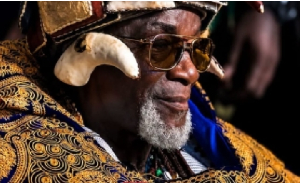
 The late Overlord of the Dagbon Traditional Area, Ya Naa Mahama Abukari II
The death of the Overlord of Dagbon Traditional Area, Yaa Naa Mahama Abukari II, has brought renewed attention to the role he played in restoring peace to Dagbon after a 16-year chieftaincy dispute.
The late monarch, who was enskinned as the 41st Yaa Naa on January 18, 2019, ascended to the throne following years of mediation that ended one of the country's longest-running traditional conflicts.
BREAKING: Overlord of Dagbon Yaa Naa Abukari II is dead
His reign became synonymous with reconciliation, stability and the rebuilding of trust within the kingdom.
The 2002 crisis
In April 2002, the government declared a state of emergency in the Dagbon Traditional Area following violent clashes in Yendi that led to the killing of the Overlord of Dagbon, Ya Na Yakubu Andani II, and at least 29 others.
The violence erupted between the two main royal gates, the Andani and Abudu families, during a long-standing chieftaincy dispute.
The king’s palace was set ablaze, and the region was thrown into turmoil, with fears that the conflict could spread to other parts of northern Ghana.
President John Agyekum Kufuor, after consulting the Council of State, invoked the Emergency Powers Act of 1994 and officially gazetted the state of emergency on March 27, 2002.
The declaration affected several districts, including Yendi, Tolon-Kumbungu, Savelugu-Nanton, Gushegu-Karaga, and Zabzugu-Tatale.
A curfew was subsequently imposed, restricting movement from dawn to dusk, which significantly impacted daily life and economic activities for residents.
Dagbon was plunged into turmoil in March 2002 following violent clashes in Yendi that resulted in the death of Yaa Naa Yakubu Andani II and several of his elders.
The incident created tensions between the Abudu and Andani royal gates, leaving the kingdom without an overlord for more than 16 years.
Several commissions of inquiry, mediation efforts and peace initiatives were undertaken over the years, but resolving the dispute proved difficult because of the deep divisions that had emerged.
A breakthrough came through the work of the Committee of Eminent Chiefs, led by the late Asantehene, Otumfuo Osei Tutu II, with support from the late Yagbonwura Bii-Kunuto Jewu Soale I and the late Nayiri Naa Bohagu Mahami Abdulai Sheriga.
The committee developed a roadmap that provided for the performance of the funerals of the late Mahamadu Abdulai IV of the Abudu gate and Yaa Naa Yakubu Andani II of the Andani gate, paving the way for the installation of a new Yaa Naa.
The successful completion of the funerals marked a historic turning point in the quest to restore peace to Dagbon.
Enskinment of Yaa Naa Abukari II
On January 18, 2019, Abukari Mahama, then Kampakuya Naa, was enskinned as Yaa Naa Abukari II at the Gbewaa Palace in Yendi.
His installation was celebrated across Ghana as the successful culmination of the peace process and the beginning of a new era for the kingdom.
Traditional leaders, government officials and residents expressed hope that his reign would permanently heal the wounds left by years of conflict.
Consolidating peace
Rather than reopening old divisions, Yaa Naa Abukari II focused on strengthening reconciliation among the people of Dagbon.
He consistently urged members of both royal gates and the wider kingdom to embrace peaceful coexistence, dialogue and mutual respect.
His leadership helped preserve the peace achieved through the mediation process, allowing Dagbon to move beyond years of instability.
Strengthening traditional governance
Beyond promoting peace, the late Overlord of Dagbon sought to strengthen the governance structures of the kingdom.
He championed efforts to amend the Dagbon Constitution to align traditional administration with contemporary governance needs while safeguarding the customs and traditions that define the kingdom.
The proposed reforms were intended to enhance transparency, improve succession arrangements and reinforce the institution of chieftaincy.
Development under his reign
Yaa Naa Abukari II also oversaw major development initiatives, including the redevelopment of the historic Gbewaa Palace in Yendi.
The ultramodern palace project became one of the defining infrastructure projects of his reign and symbolised the renewal of Dagbon following years of uncertainty.
He also maintained cordial relations with successive governments, development partners and traditional authorities across Ghana, advocating development in education, healthcare, infrastructure and youth empowerment.
A lasting legacy
Although his reign has come to an end, Yaa Naa Abukari II leaves behind a legacy that extends far beyond traditional leadership.
As Dagbon begins the customary rites that will lead to the enskinment of a new Yaa Naa, he will be remembered not only as a traditional ruler but as a symbol of reconciliation, stability and hope whose leadership helped write a new chapter in the history of Dagbon.
JKB/VPO
'Stop dumping refuse into gutters' - President Mahama cautions Ghanaians

Copyright © 1994 - 2026 GhanaWeb. All rights reserved.










