



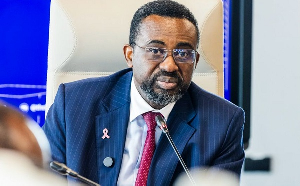
 BoG Governor, Dr Johnson Pandit Asiama
The Bank of Ghana (BoG) has maintained its Monetary Policy Rate at 14 percent following the conclusion of the 131st meeting of its Monetary Policy Committee (MPC).
The decision was taken unanimously at the committee's regular meeting held from July 20 to 22, 2026, after members reviewed inflation trends, exchange rate developments, economic growth prospects and other key macroeconomic indicators.
The policy rate, which serves as the benchmark for lending and borrowing costs in the economy, remains unchanged as the central bank seeks to steer inflation towards its medium-term target while monitoring emerging global risks.
High Court orders takeover of No 1 Oxford Street Hotel owned by Cheddar
Governor of the Bank of Ghana and Chairman of the MPC, Dr Johnson Pandit Asiama, speaking at a press briefing in Accra on July 22, 2026, said the current monetary policy stance remains appropriate despite growing uncertainties in the global economy.
He noted that rising geopolitical tensions in the Middle East, increasing crude oil prices and possible adjustments in utility tariffs pose upside risks to Ghana's inflation outlook.
"Potential upward adjustments in utility tariffs together with escalating geopolitical tensions in the Middle East and the associated increase in crude oil prices present upside risks to the inflation outlook.
"On the downside, continued fiscal consolidation and an appropriately calibrated monetary policy stance should help moderate these risks going forward. Now, given these considerations, the committee, the MPC, by a unanimous decision, maintained the monetary policy rate at 14.0 percent," Dr Asiama said.
He further explained that the committee judged that the current policy stance remains appropriate to guide inflation into the medium-term target band while allowing time to assess evolving geopolitical developments and their potential impact on the domestic economy.
Dr Asiama added that renewed tensions in the Middle East have heightened uncertainty in the global economic environment, with crude oil prices rising above US$85 per barrel following the escalation of conflict and the closure of the Strait of Hormuz.
According to him, the increase in oil prices, coupled with disruptions to global trade routes, has renewed volatility in energy markets and could slow the pace of global disinflation, with possible implications for Ghana's economy.
MA

Copyright © 1994 - 2026 GhanaWeb. All rights reserved.










