



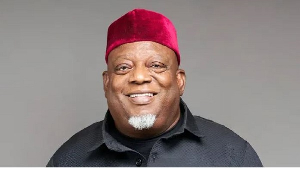
 Joe Jackson is the chief executive officer of Dalex Finance
Chief Executive Officer of Dalex Finance, Joe Jackson, has attributed Ghana’s 2022 economic crisis to excessive borrowing and unsustainable debt levels, urging policymakers to introduce constitutional limits on public borrowing to prevent a recurrence of the country’s financial challenges.
Speaking on the need to build a more resilient economy on TV3 on Thursday July 23,2026, Jackson said the country’s debt burden reached unsustainable levels because government revenues were no longer sufficient to meet key financial obligations, including salary payments and interest on loans.
“The crash of 2022 occurred because we were over-borrowed. Our revenue could barely pay salaries and the interest on our debt,” he said.
Online restaurant scams cost Ghanaians nearly GH¢300,000 in first half of 2026 - CSA
According to him, one of the key lessons from the economic crisis is the need to ensure that public debt remains within sustainable limits, stressing that this should become a major measure of fiscal discipline.
“One of the things we should watch out for is how we keep our debt within limits that are sustainable. Those are the metrics we should watch,” he stated.
Jackson argued that the economic difficulties experienced between 2022 and 2024 were triggered by unsustainable borrowing, explaining that the government had accumulated debt beyond its capacity to repay.
“The crash of 2022 and the crisis that followed in 2022, 2023 and 2024 were all kicked off by the fact that our debt was unsustainable. Our revenues did not match the amount of money we had borrowed,” he said.
To strengthen Ghana’s long-term economic resilience, he proposed that borrowing limits under the country’s IMF-supported programme should be backed by the Constitution to prevent governments from exceeding prudent debt thresholds without broader approval.
“One of the first things we must do to create resilience is to make sure we don’t borrow too much and keep within the limits we have committed ourselves to. Those IMF monitoring programme limits must be written into the Constitution,” he said.
Jackson also suggested that governments should be required to seek approval before borrowing beyond an agreed threshold.
“I like the US style where, to be able to borrow beyond a certain limit, you have to go back for approval. Those are some of the things we must do to get sustainability going,” he added.
He stressed that prudent public spending was equally critical to maintaining economic stability, arguing that excessive government expenditure worsened the country’s fiscal challenges after the debt crisis emerged.
“We have to continue to show responsibility in how government spends its money. The crash was initiated by our borrowing, but fuel was poured onto the fire by the fact that we just continued to spend and spend and spend. We must be disciplined on that side,” he concluded.
ANAS/MA
Transitions serves over 2,000 direct and indirect clients weekly - MD

Copyright © 1994 - 2026 GhanaWeb. All rights reserved.










