



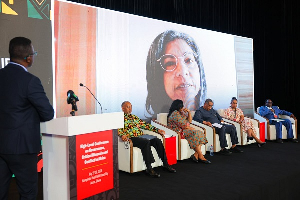
 According to him, governance, critical minerals and conflict should not be treated separately
The Director of the Democratic Futures in Africa programme at the Open Society Foundations, Dr Chukwuemeka B. Eze, has called for stronger governance frameworks to enable African countries to maximise the opportunities presented by critical minerals while preventing conflict and promoting inclusive development.
He said Africa’s growing mineral wealth should not be viewed solely through the lens of extraction, but also as an opportunity to rethink the continent’s approach to governance, development and the management of natural resources for the benefit of its people.
Dr Eze made the call in Accra on Monday, July 27, 2026, on the sidelines of a three-day high-level conference on governance, critical minerals and conflicts in Africa organised by the Open Society Foundations.
Africa must not repeat past mistakes with critical minerals - Goosie Tanoh
The conference, which runs from July 27 to 29, has brought together policy analysts and stakeholders from across Africa to explore how critical minerals can be governed in ways that promote economic justice, conflict prevention, democratic governance and the protection of communities in resource-rich areas.
Dr Eze said the discussions were intended to move beyond identifying the challenges associated with critical minerals and instead focus on developing practical strategies that place governance at the centre of Africa’s mineral opportunities.
“We are not just looking at what is wrong that exists with these critical areas, but we are looking at the future. How can we use the opportunities that is presented by itself to now advance a new charter for Africa and African citizens?” he said.
He said Africa must develop governance frameworks capable of ensuring that growing global interest in critical minerals translates into tangible benefits for African citizens rather than creating new forms of inequality, conflict or exploitation.
According to him, governance, critical minerals and conflict should not be treated as separate issues because weaknesses in one area can undermine progress in the others.
He therefore called for greater collaboration among governments, civil society organisations, policymakers and the media to strengthen accountability and ensure that communities are included in decisions concerning natural resource development.
Dr Eze also stressed the importance of investing in knowledge and education, arguing that Africa’s ability to benefit from its mineral wealth would depend partly on the capacity of its people to understand, process and add value to the resources available to the continent.
He said African countries must build the knowledge base and technical capacity required to process their own resources instead of remaining dependent on external expertise and technology.
The call comes amid growing global demand for critical minerals and increasing interest in Africa’s mineral resources. While the demand presents significant economic opportunities, it has also raised concerns about transparency, accountability, equitable distribution of benefits, environmental protection and the rights of communities in resource-rich areas.
Dr Eze said the current moment provides Africa with an opportunity to establish a new approach to natural resource governance that places citizens and sustainable development at the centre.
The conference is expected to advance stronger approaches for managing Africa’s critical minerals through inclusive governance, regional cooperation and policies that support value addition, industrialisation and shared prosperity.
MA

Copyright © 1994 - 2026 GhanaWeb. All rights reserved.










